

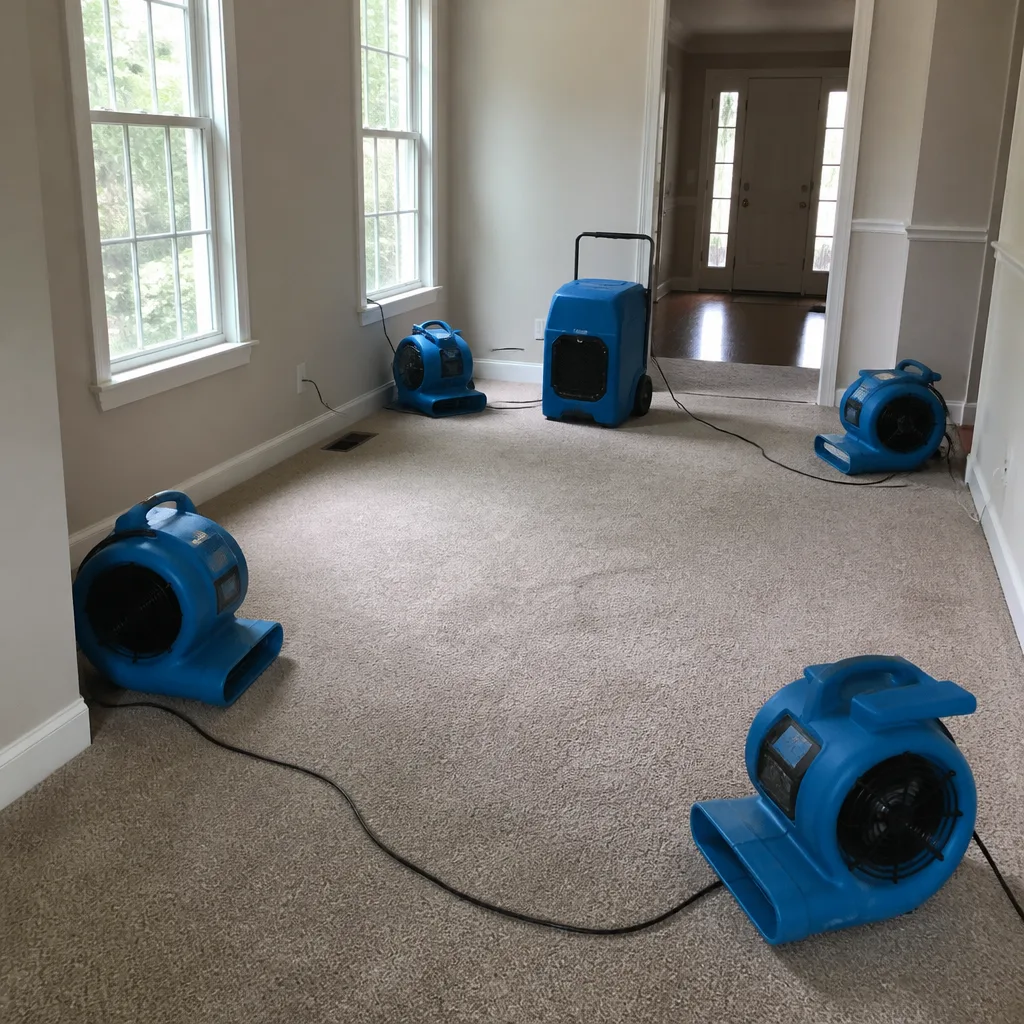
 Water damage drying
 Fire & smoke cleanup
 Mold remediation
 Storm response
 Sewage cleanup
 Reconstruction
Free visual inspection and a written scope of work before any mitigation begins - photos, moisture readings, and drying logs go in your claim file
The scope we write is the scope we bill. Anything new gets shown to you, in writing, before we touch it.
Get your free estimateFast, Reliable Mold Remediation Across Cypress
Mold remediation in Cypress usually runs between $1,800 and $4,500 for a contained removal job in a single room, with full under-slab leak scenarios running higher. We get a live person on the phone at (562) 999-7643 any hour, and we can have a crew at your Cypress home the same day you call. If you’ve noticed a musty smell in a hallway or staining on a baseboard, don’t wait. In Cypress’s slab-on-grade tract homes, what starts as a faint odor often traces back to water that’s been trapped in a wall cavity for weeks.
Why Marsh Water Damage Long Beach Is Cypress’s Preferred Mold Remediation Company
We’ve worked Cypress homes long enough to know the difference between a surface stain and a slab leak. It’s a distinction that matters here more than almost anywhere else in Orange County. Tobias Reyner leads our mitigation team, and he will tell you straight: in Cypress, you treat the water source first or the mold comes back. That’s not a sales line. It’s what we see every month in tract homes from the 1960s and 70s.
Our techs inspect, set containment, map moisture, dry the structure, remove damaged material, and apply antimicrobial treatment only after the moisture problem is solved. Before anyone arrives, you get the tech’s name and photo. At the door, they show a photo ID badge. That’s the Threshold Verified standard, and it applies on every single visit, no exceptions. We also write the price down before any work starts. No surprises after demo begins.
Restoration work we handle
Mold Inspection in Cypress
A mold inspection in Cypress runs $350 to $650 for a focused assessment with moisture mapping, and it’s the right first step when you smell something but can’t see it. In Cypress’s slab-built homes, visible mold is often the last symptom, not the first. The real problem sits under the slab or inside a wall cavity, fed by a failed cast-iron drain line that’s been leaking for weeks. A visual-only check misses that every time.
What the Inspection Covers
We check interior walls, baseboards, closets, and HVAC registers. We also map moisture levels with a moisture meter across flooring and drywall. That’s how we find water that isn’t visible yet. If readings point to an under-slab source, we’ll tell you before any remediation starts, because the fix involves a plumber and a slab cut, not just drying equipment.
When Cypress Homeowners Should Inspect
Call us if a hallway smells musty but you can’t find the source. Call us after any plumbing backup, because water can migrate under slab flooring and into adjacent wall cavities. Also call before you buy an older Cypress home. Mid-century tract homes can carry hidden moisture issues that a standard home inspection won’t catch. Our Mold Remediation team works from the inspection findings, so you aren’t paying twice for the same diagnosis.
Mold Removal Specialist in Cypress
A mold removal specialist in Cypress handles containment, source control, demolition of contaminated materials, and structural drying, with most single-room jobs running $1,800 to $4,500. The specialist part matters. In a 1968 tract home with original cast-iron drains, the mold you see on drywall usually connects to water you can’t see under the slab. A paint-and-bleach crew won’t fix that. We will.
Containment Before Any Demo
We set negative air pressure and plastic containment before we open any wall. This matters in Cypress’s open-plan mid-century layouts. Without containment, airborne spores spread through interconnected living spaces and HVAC returns in minutes. Every removal job gets this step, regardless of how small the visible patch looks.
Under-Slab Source Tracing
When the moisture map points below the slab, we coordinate with a licensed plumber to expose the failed line. Then we dry the wall cavity, remove the damaged drywall, and treat the framed area. That order matters. Treating surface mold while the slab still leaks is the single most common reason Cypress homeowners call us back for a second remediation.
Trusted Brands We Service in Cypress
We run Dri-Eaz air movers, Phoenix dehumidifiers, and XPOWER HEPA-filtered air scrubbers on Cypress jobs. These are the same machines used on large commercial losses, and they’re what we schedule for your residential job. Having the right gear matters less than knowing how to use it, which is where our IICRC, RIA, and IFA credentials come in. Tobias Reyner’s team sets equipment based on moisture readings, not guesswork. That’s the difference between dry and actually dry.
See the difference
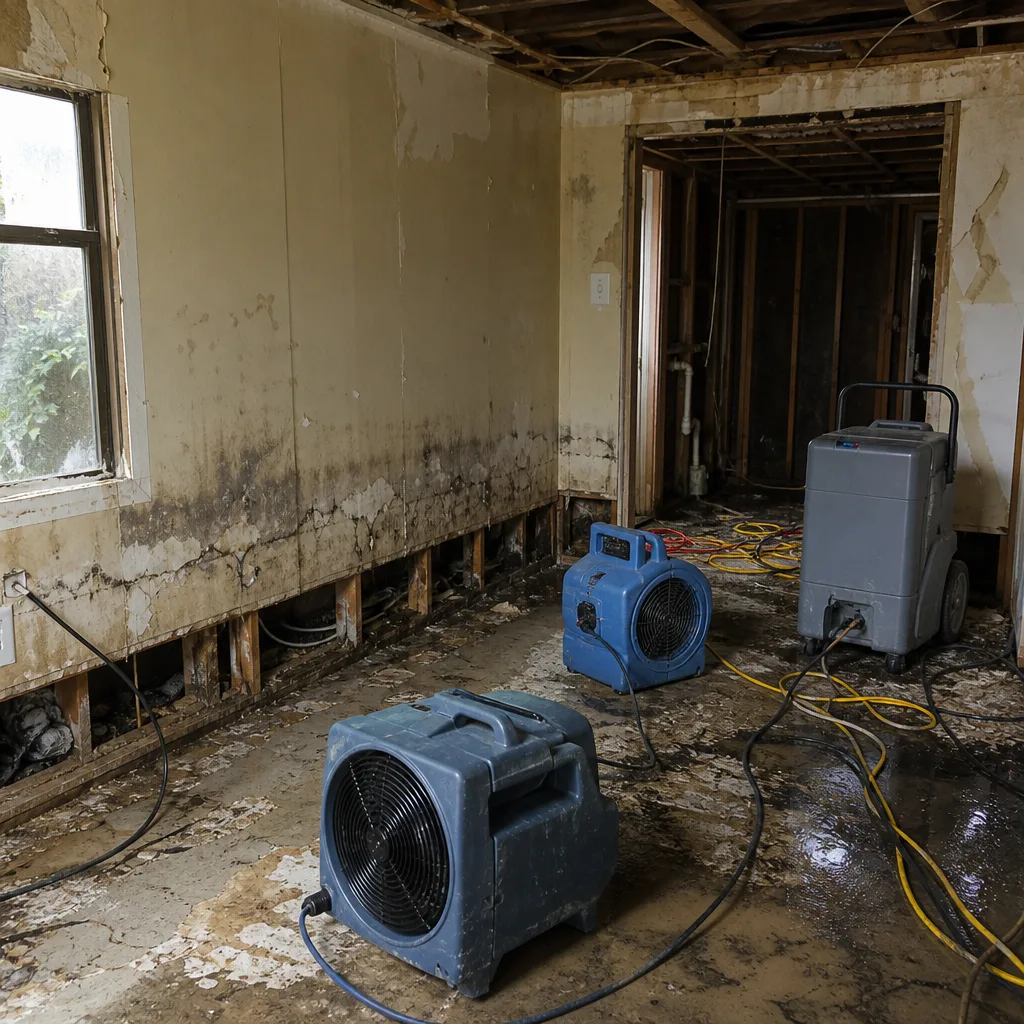 Before
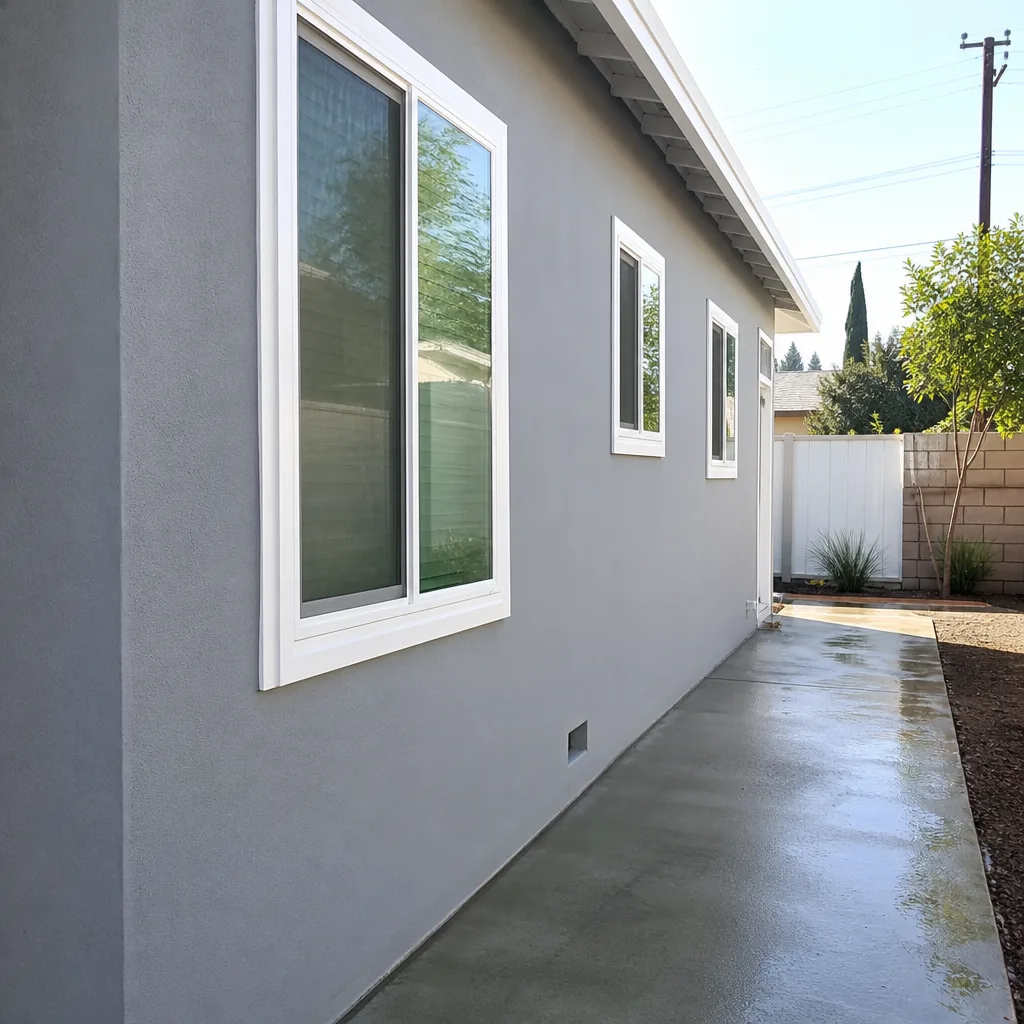 After
After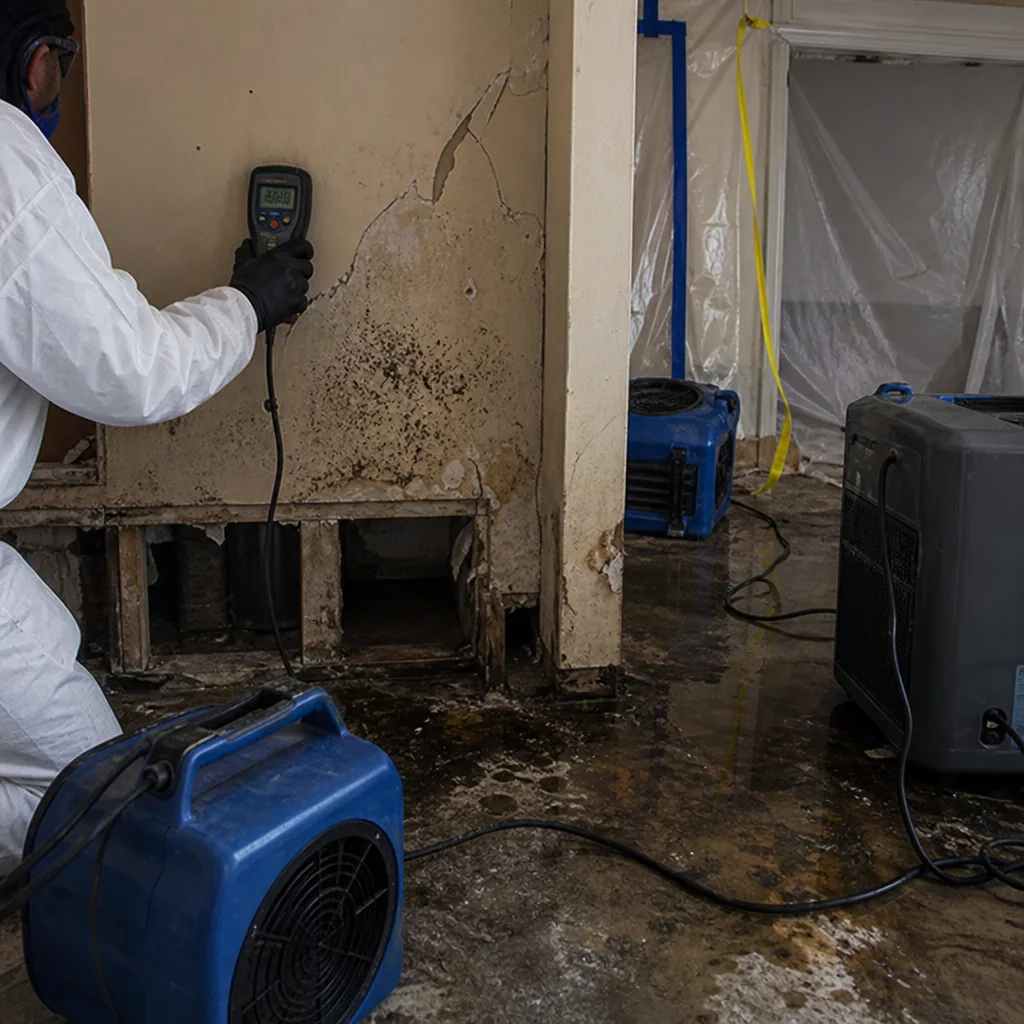 Before
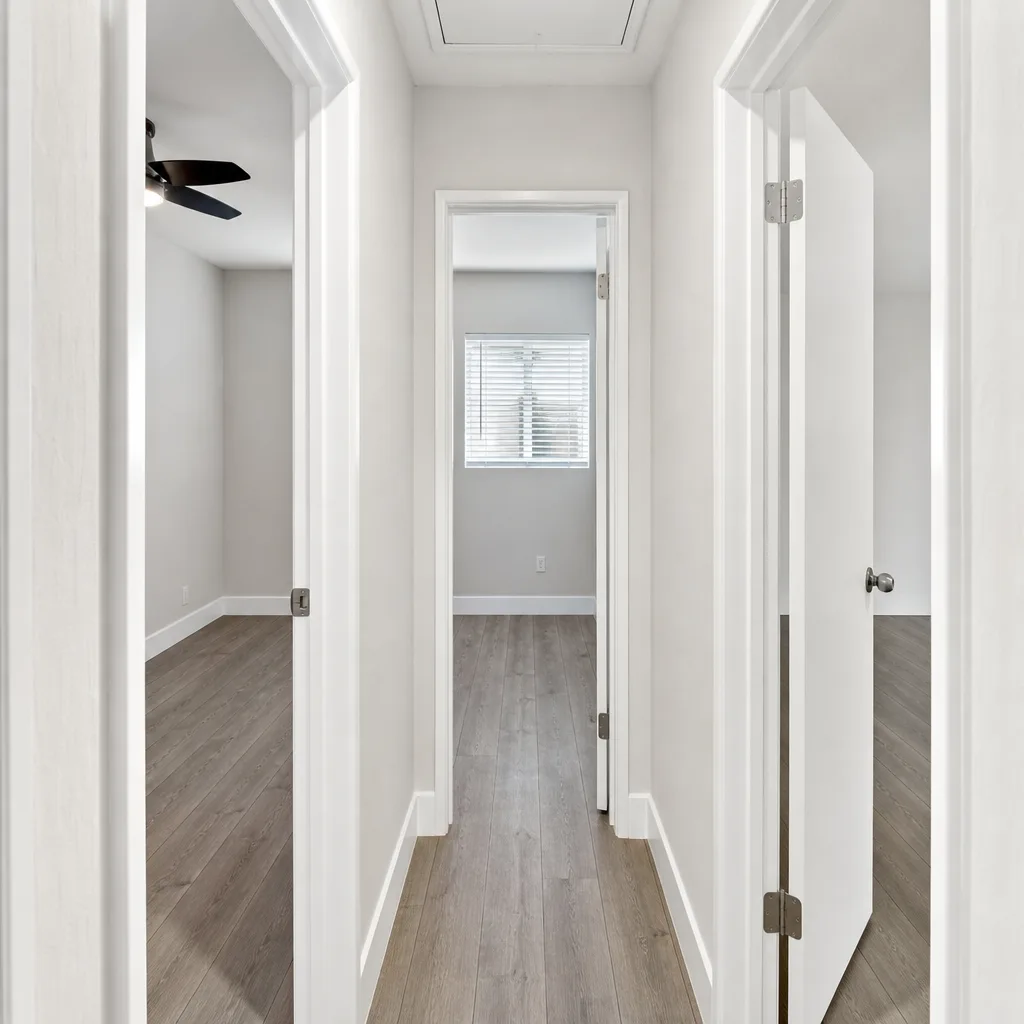 After
After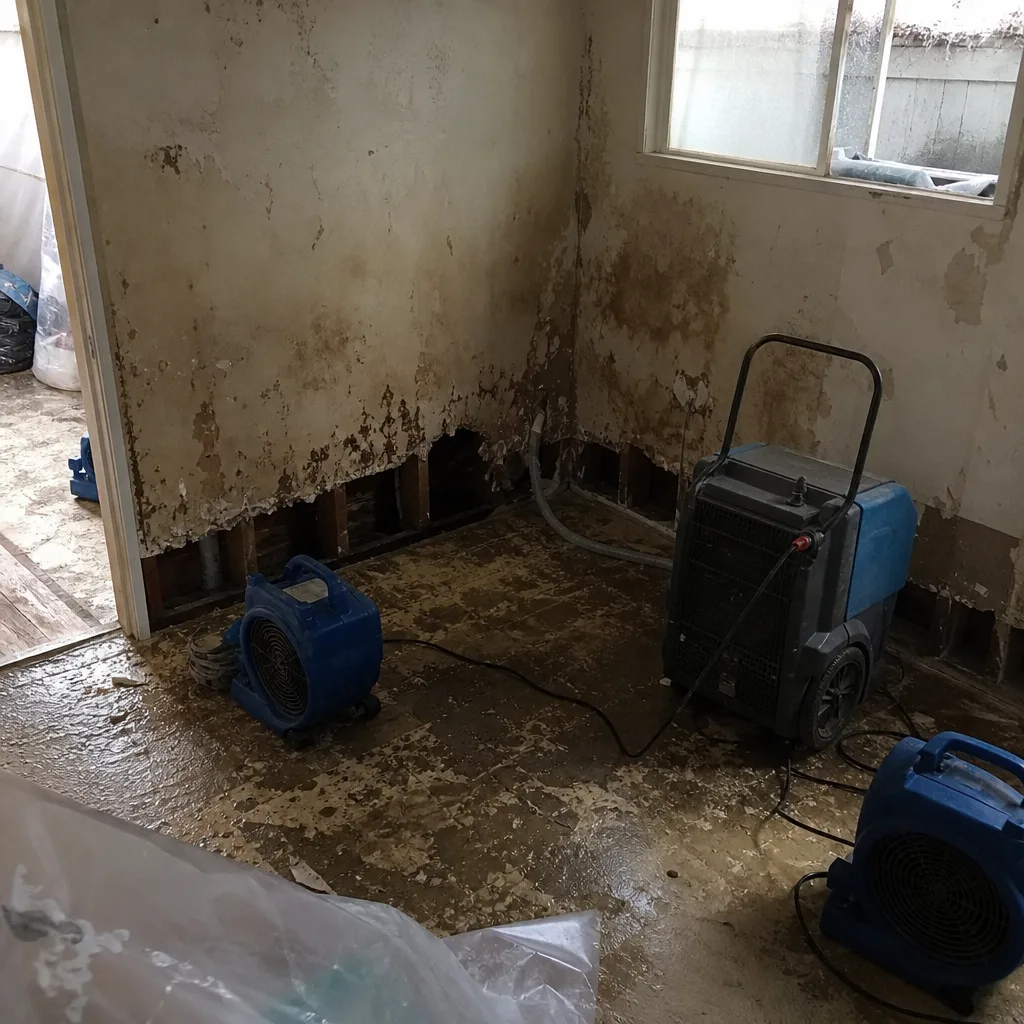 Before
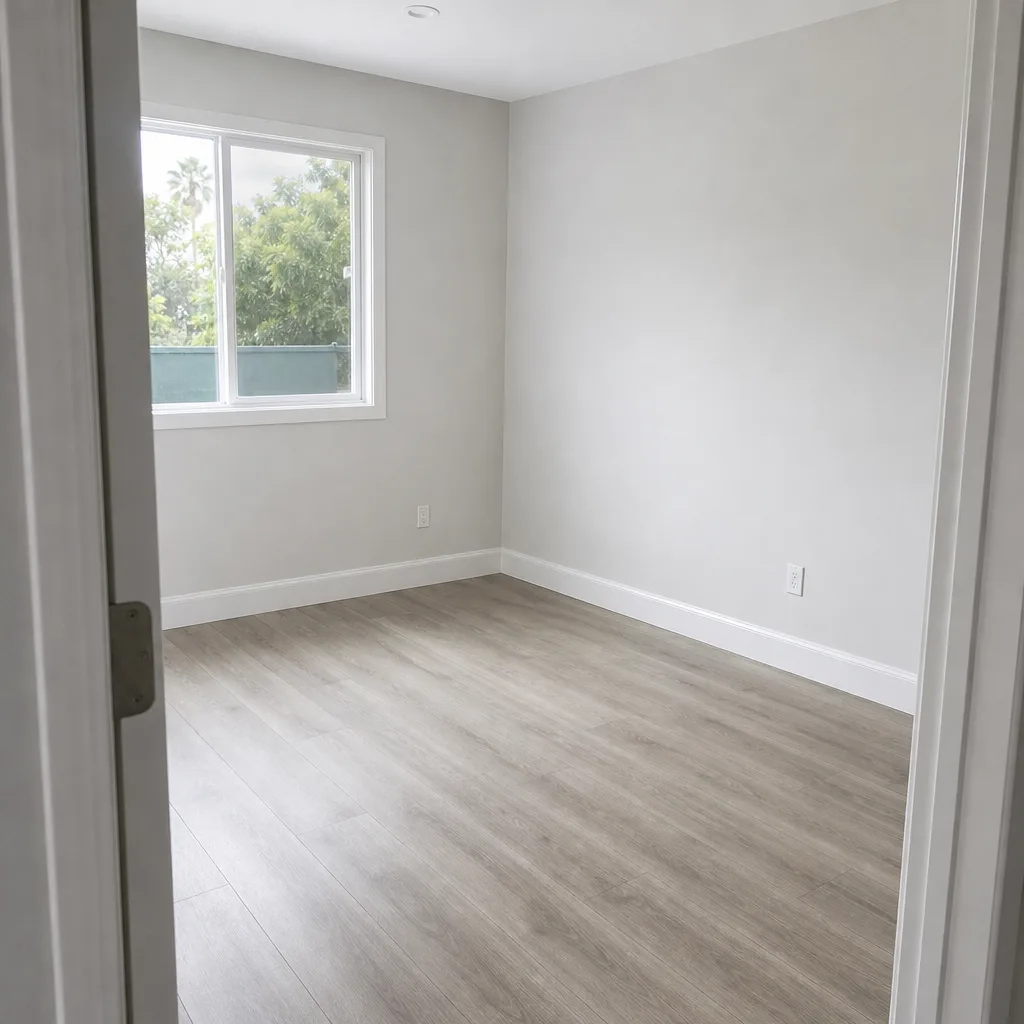 After
AfterCommon Mold Remediation Problems We See in Cypress Homes
- Under-slab cast-iron drain failures: In Cypress’s 1960s-to-1980s tract homes, original cast-iron lines crack and leak under the slab. Water wicks upward through the concrete and into bottom plates and drywall, and mold grows inside the wall before you ever see a stain.
- Surface-only treatments that fail: We see jobs where a previous contractor scrubbed visible mold but never traced the moisture source. In Cypress, that’s usually an unresolved under-slab leak. The mold returns within three to six weeks.
- Skipped containment in open-plan layouts: Mid-century Cypress homes flow from room to room. Doing demo without containment sends spores into every shared space, including the HVAC returns. We never open a wall without setting containment first.
- Residual marine moisture in porous stucco: Cypress sits close enough to the coast that stucco and drywall retain ambient moisture longer than inland homes. A category 2 water problem left untreated inside porous materials reactivates mold even after visible stains are gone.
Pricing for Mold Remediation in Cypress, CA
Mold inspection in Cypress runs $350 to $650. A single-room mold removal with containment, demolition, drying, and antimicrobial treatment typically lands between $1,800 and $4,500. When the job involves cutting the slab to access a failed cast-iron drain line, expect $5,000 to $12,000 depending on how far the line runs and what flooring needs replacement. The price you approve before work starts is the price you pay. That’s written on the work order. Call (562) 999-7643 for a free estimate, and we’ll give you a straight number after the inspection, not a range that balloons later.
We Also Serve Cities Near Cypress
Marsh Water Damage Long Beach handles Mold Remediation in Cypress and the surrounding communities, including Hawaiian Gardens, Cerritos, Artesia, and Westminster. If you live just outside Cypress, call (562) 999-7643 and we’ll verify whether our dispatch radius covers your address.
Serving Cypress, CA - Our Local Coverage Area
We’re based in the Cypress area and know this community well. Use the map below to see our service coverage - if you’re nearby, we can almost certainly help.
FAQs About Mold Remediation in Cypress
Because Cypress is full of mid-century tract homes built on slab foundations with original cast-iron drain lines. When those lines crack, often after 40 to 50 years, water leaks under the slab and wicks upward through the concrete into walls and flooring. You won’t see a roof stain or a ceiling drip. You’ll notice a musty smell in a hallway or a warped baseboard, and by then mold has been growing inside the wall cavity for weeks.
No, not every mold problem needs a slab cut. If the moisture source is a supply-line leak, a window flashing failure, or a shower pan issue, we dry the affected cavity and treat the surfaces without cutting concrete. We only recommend cutting the slab when moisture mapping confirms a below-slab source, typically a failed cast-iron drain. Call us at (562) 999-7643 and we’ll tell you which situation you’re in before any work is scheduled.
Mold can start within 48 to 72 hours when organic material like drywall or wood stays wet, and Cypress’s coastal humidity can speed that timeline slightly compared to drier inland cities. Under-slab leaks are worse because the materials stay wet continuously for weeks or months. By the time you smell it, the colony is already established inside the wall cavity.
Moisture mapping means we systematically take moisture readings across floors, walls, and baseboards using a moisture meter, then record those numbers on a floor plan. For a slab-on-grade Cypress home, the map shows us whether water is sitting in one wall cavity or migrating across the slab under flooring. That tells us whether the source is above the slab, which we can dry, or below it, which needs a plumber and possibly a slab cut.
The most common answer in Cypress is an under-slab leak from an aging cast-iron drain line in a bathroom or kitchen. Water travels from the pipe break, under the slab, and up into wall cavities where it soaks the drywall from the back side. Since the front face stays dry longer, you never see standing water. You’ll only see mold once it grows through, or smell it first. Call (562) 999-7643 and we’ll trace it to the source rather than just cleaning the surface.
Written by Tobias Reyner, Owner at Marsh Water Damage Long Beach, serving Cypress with mold inspection and remediation that addresses the water source, not just the stain.