

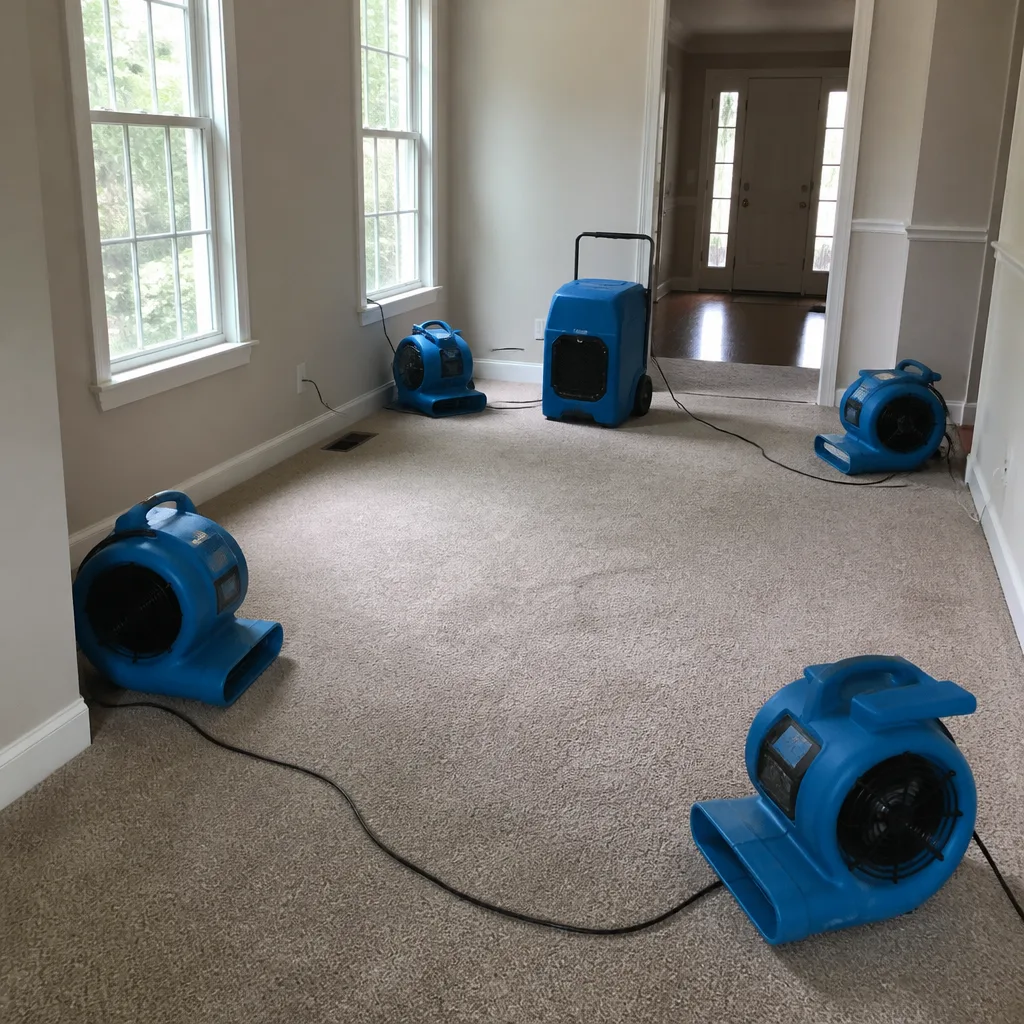
 Water damage drying
 Fire & smoke cleanup
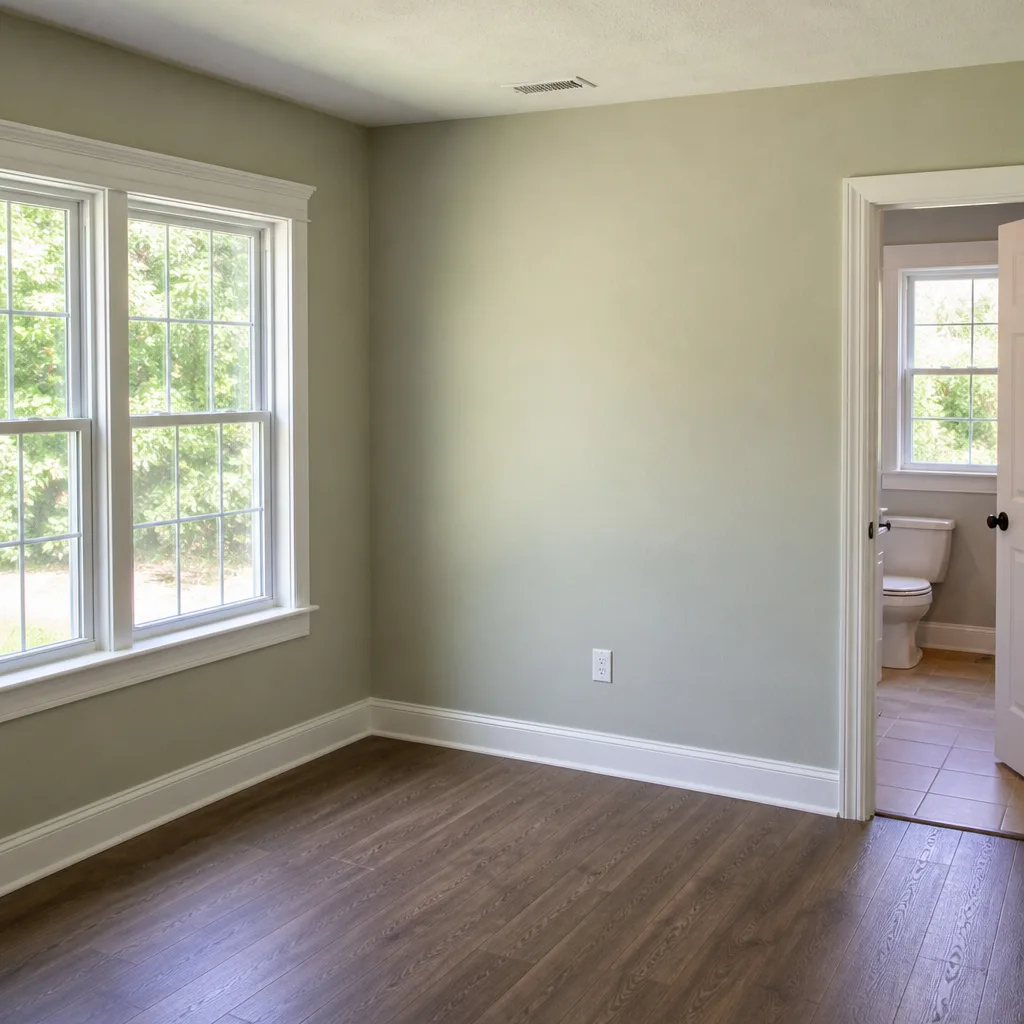 Mold remediation
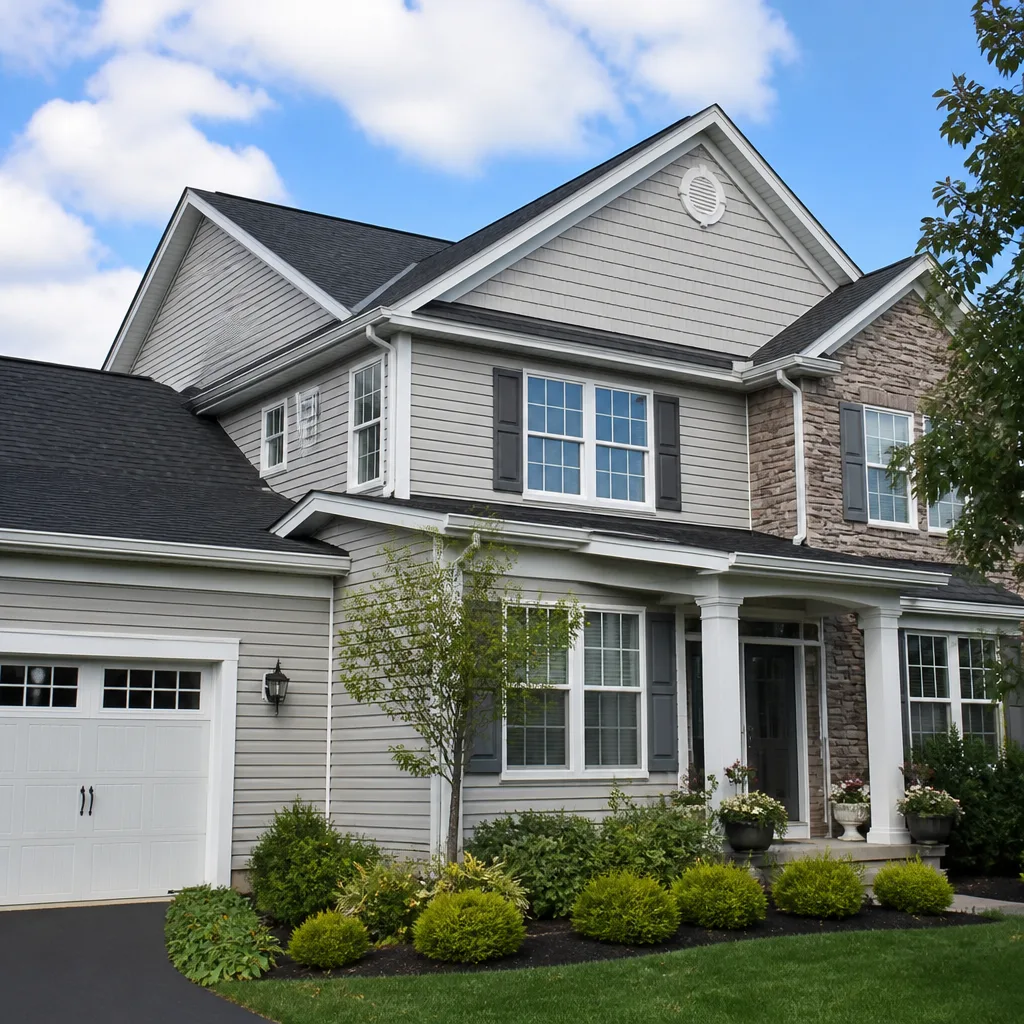 Storm response
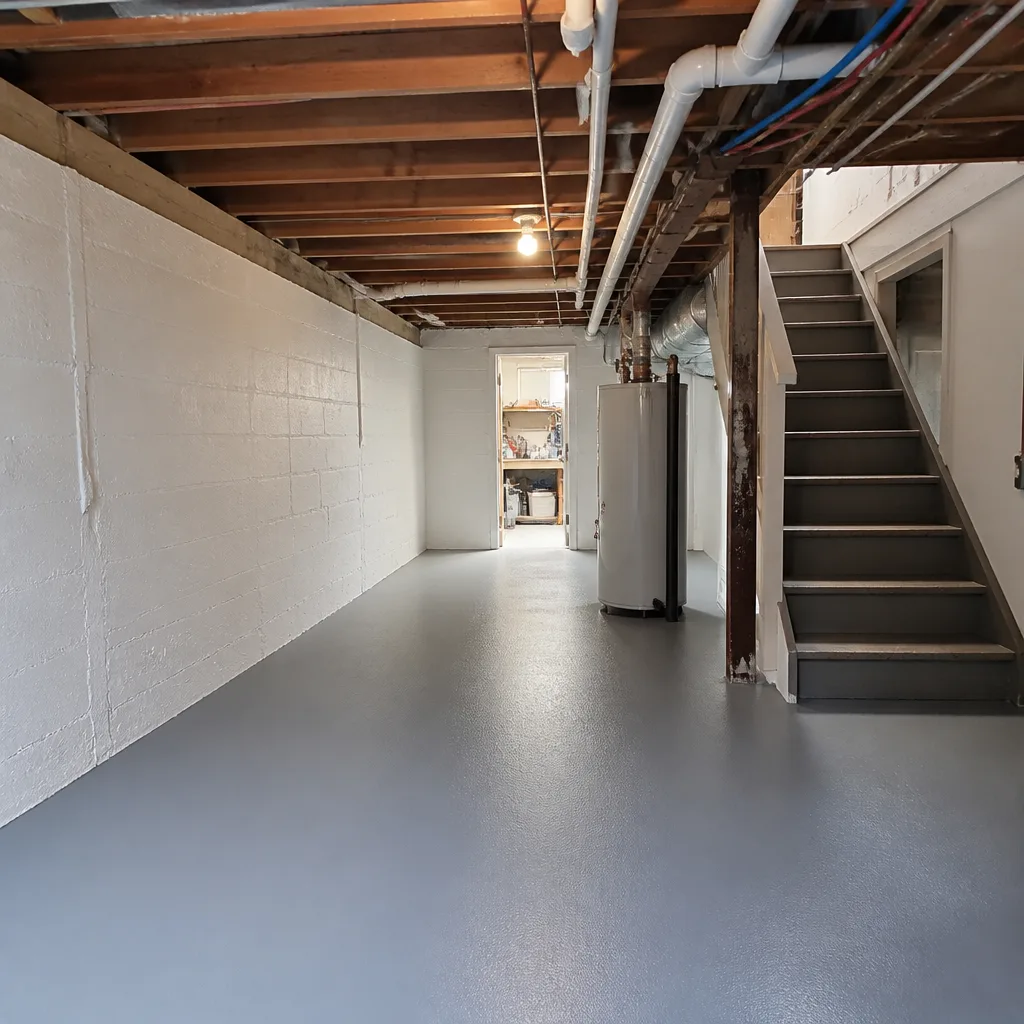 Sewage cleanup
 Reconstruction
Free visual inspection and a written scope of work before any mitigation begins - photos, moisture readings, and drying logs go in your claim file
The scope we write is the scope we bill. Anything new gets shown to you, in writing, before we touch it.
Get your free estimateFast, Reliable Storm Damage Restoration Across Lakewood
Storm damage in Lakewood moves fast, and so do we. When wind-driven rain or a downed tree compromises your home, our crews are dispatched from the Los Angeles area and arrive in Lakewood ready to extract water, secure the structure, and start drying before the damage spreads. Most calls get a live person on the phone immediately at (562) 999-7643, and we’re typically at your door within hours, not days. Lakewood’s 1950s tract homes need a restoration team that understands slab-on-grade construction and cast-iron plumbing, because stormwater intrusion here rarely behaves the way it does in newer subdivisions. If your house is flooding right now, call (562) 999-7643.
Why Marsh Water Damage Long Beach Is Lakewood’s Preferred Storm Damage Restoration Company
Marsh Water Damage Restoration has been doing this work since 2005 as part of the Threshold Group family of restoration companies. Homeowners across Lakewood call us because we show up with a written price before any work begins, and every technician arrives with a name and photo sent to you in advance. That’s the Threshold Verified standard, and it applies to every visit, not just the first one.
We’ve handled storm losses in the Mayfair neighborhood, Lakewood Park, and along Carson Street where older stucco homes take wind-driven water through door seals and around aging slab penetrations. Our technicians hold credentials through the IICRC, RIA, and IFA, and they run the same Dri-Eaz and XPOWER equipment you’d find on a large commercial loss. The 365-Day Done Right Promise means if a repair fails within a year, we return and make it right, free of charge. Tobias Reyner leads our team, and he’s structured the company so no homeowner in Lakewood ever has to wonder who’s walking through the door.
Restoration work we handle
Flooded House in Lakewood
A flooded house in Lakewood usually means water has entered through multiple points: a wind-driven storm pushed rain past a cracked stucco wall, or saturated ground found its way under a slab edge and wicked upward through carpet and drywall. These jobs require immediate extraction, plus moisture mapping across the slab to find where water is actually traveling, because a 1950s tract home hides water inside wall cavities and under flooring far from the visible entry point. Most residential storm-related water extractions in Lakewood run between $1,200 and $3,400 before drying equipment is set, depending on square footage and how far the water has migrated.
Slab-On-Grade Extraction and Drying
In a slab-on-grade home, we can’t just point air movers at the carpet and wait. Water trapped under vinyl flooring or inside the top inch of a concrete slab keeps feeding moisture back into the air long after the surface looks dry. We use psychrometric readings (measuring the moisture in the air and materials) to confirm when the structure is genuinely dry, not just dry to the touch.
Emergency Board-Up and Tarping
When a storm knocks out a window or tears off a section of roof, the first step is keeping more water from getting in. We install temporary board-ups and roof tarps the same day, then write a separate scope for the permanent repair, with a price you approve before anything is rebuilt.
Flood Restoration in Lakewood
Flood restoration in Lakewood is the full path from standing water back to a dry, stable home. It includes extraction, demolition of unsalvageable materials, structural drying, and then the rebuild or repair of what was removed. On a 1950s slab-on-grade house, the restoration plan often has to account for a failing cast-iron drain line that contributed to the flooding in the first place. Full flood restoration on a single room in Lakewood typically lands between $4,000 and $9,500, while whole-house losses can reach $20,000 or more depending on structural involvement.
Moisture Mapping Before Drying
We don’t guess where water went. Technicians map the migration path with moisture meters and thermal imaging, marking the exact perimeter of the wet zone on the slab and walls. This tells us where to set equipment and where to cut, so we’re not ripping out drywall that’s actually dry.
Cast-Iron Line Coordination
If the flood exposed a corroded cast-iron waste line under the slab, drying the hallway isn’t enough. We coordinate with a licensed plumber to re-pipe the section before we rebuild, so the same storm doesn’t flood the same hallway next winter. Our scope of work addresses the original leak, not just the cleanup.
Trusted Brands We Service in Lakewood
Homeowners in Lakewood sometimes ask whether we work on equipment from brands they already know. We stock parts for Phoenix and Dri-Eaz drying systems and run XPOWER air movers on most residential jobs. That means if you have a Dri-Eaz dehumidifier that a previous contractor left behind, we can service it or match it with the right equipment for your current loss. For homeowners with existing Phoenix controls or XPOWER fans, our techs can integrate new gear without starting from scratch. Turnaround on parts for Lakewood customers is usually one to two days because we keep the most common components on our trucks.
Common Storm Damage Restoration Problems We See in Lakewood Homes
- Under-slab water migration from failed cast-iron lines. Lakewood’s original 1950s waste lines are at the end of their service life, and a heavy storm can push groundwater into a corroded pipe, causing moisture to travel beneath the slab and surface far from the actual leak.
- Wind-driven water through worn door seals. Older stucco homes in Lakewood often have original door frames that have warped slightly over seventy years. A strong wind storm forces rain through those gaps and into wall cavities, even when the door is closed.
- Surface-dry slabs that are still wet underneath. A slab can feel dry to the palm while moisture readings above 18% remain in the top inch. Skipping moisture mapping on slab-on-grade homes is how contractors leave a house with hidden water that feeds mold later.
- Scopes that ignore the original defect. It’s common to see a restoration bid that covers carpet pack-out and drying but never mentions the cast-iron cleanout leak that caused the flood. We write scopes that fix the source, not just the symptom.
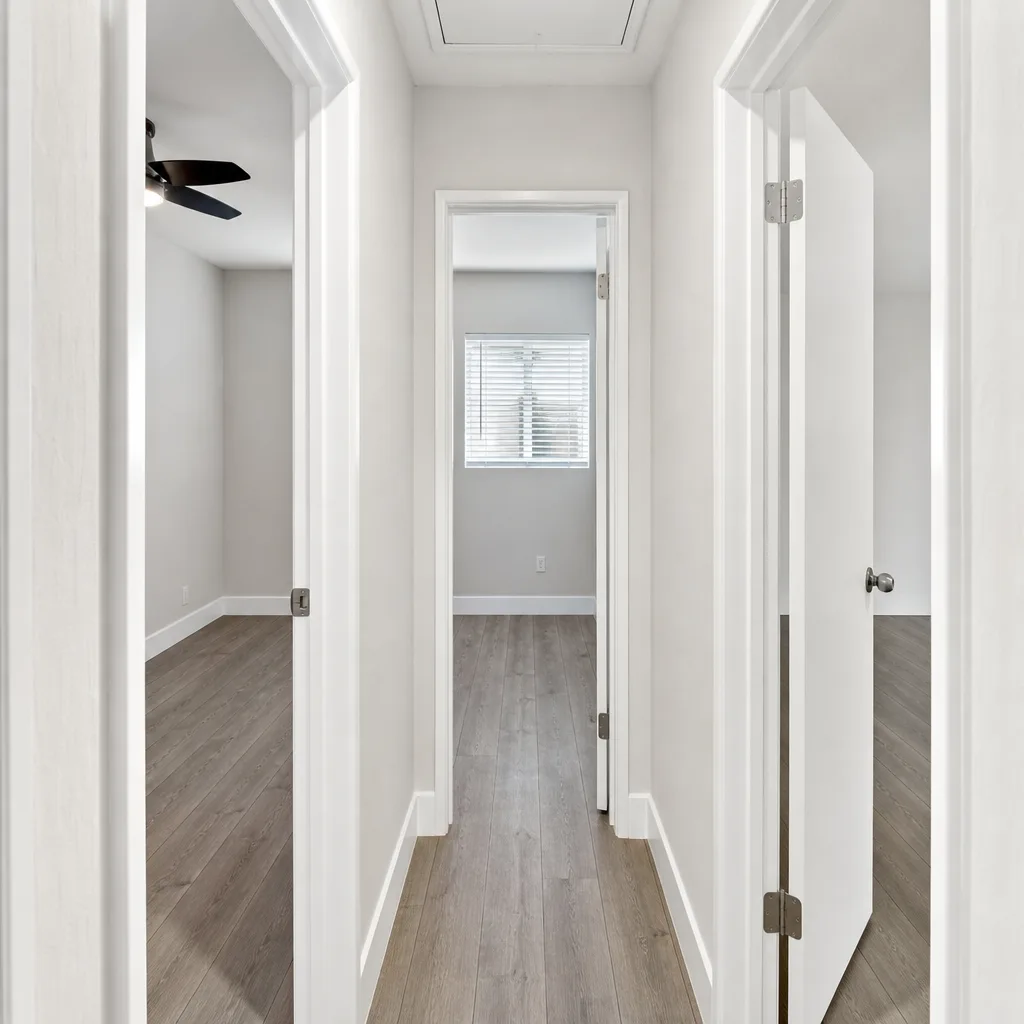
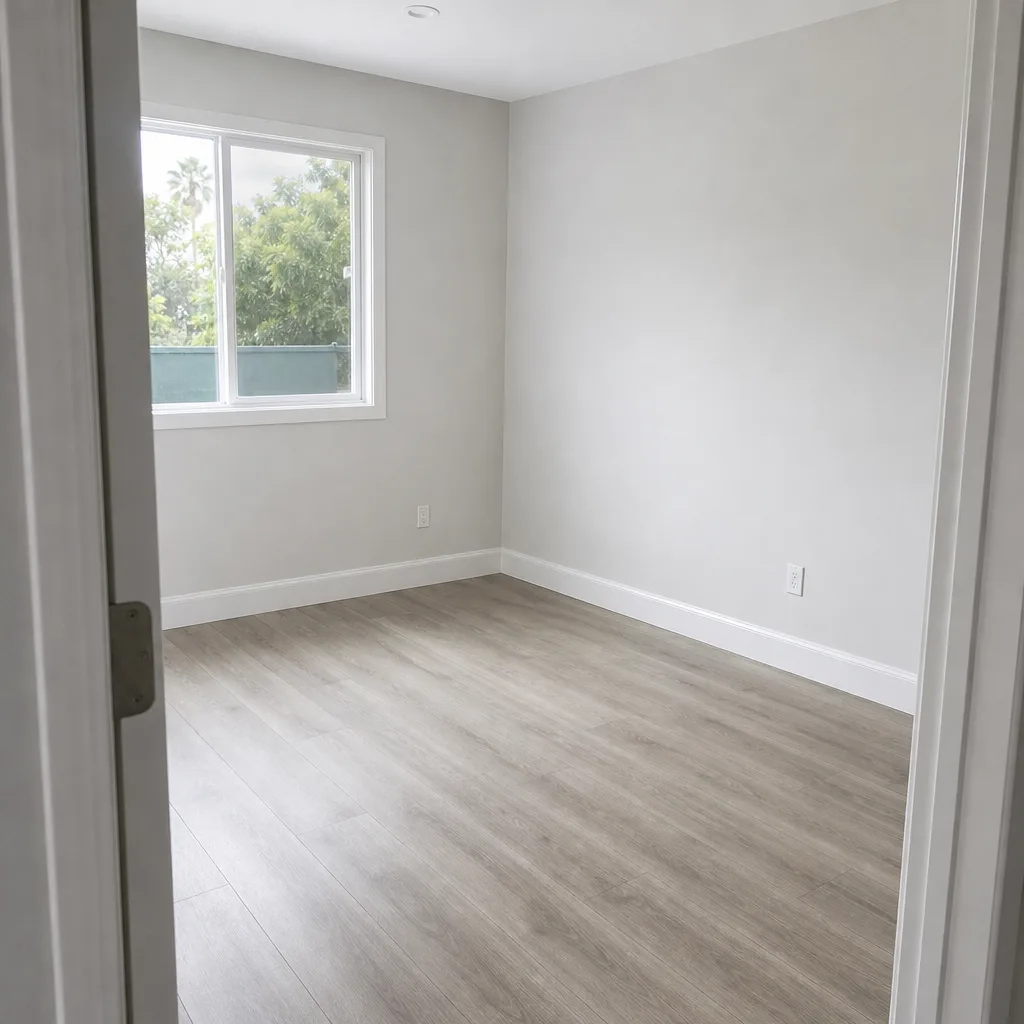
See the difference
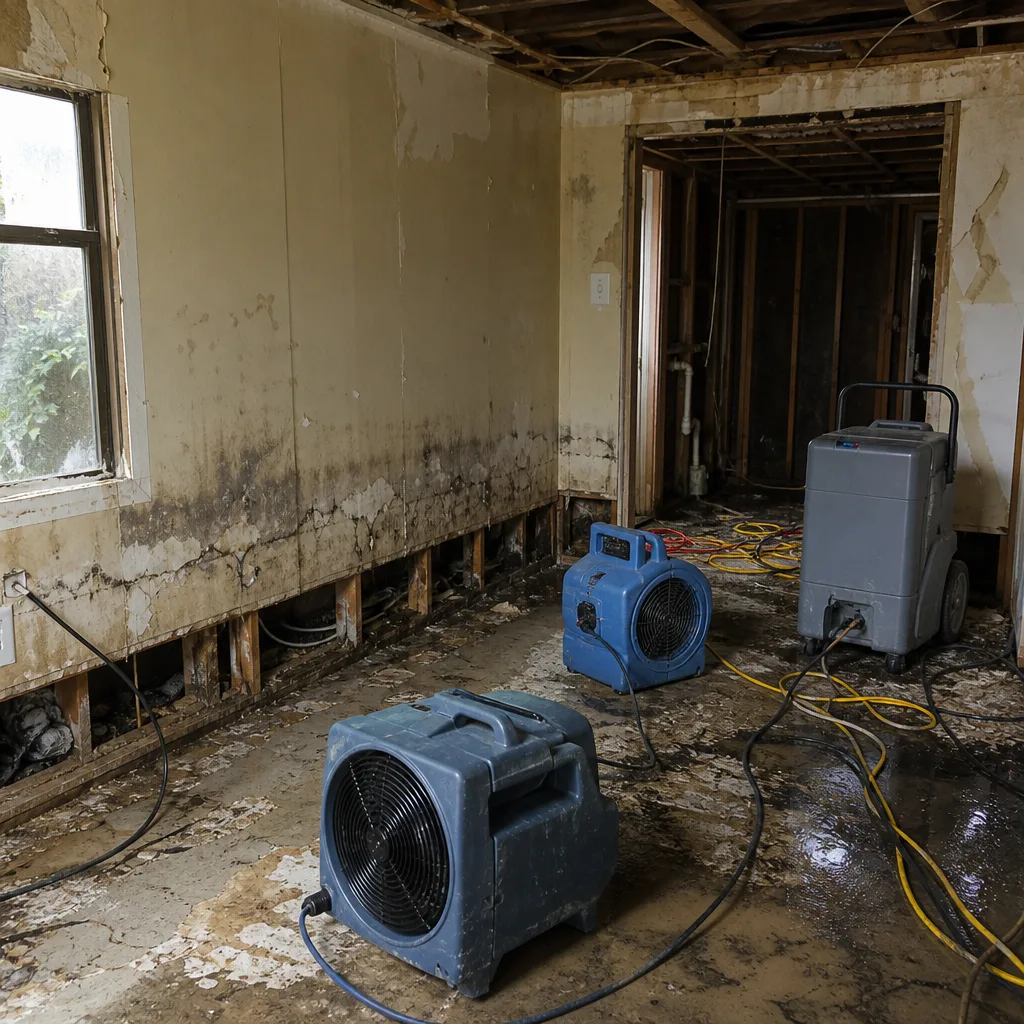 Before
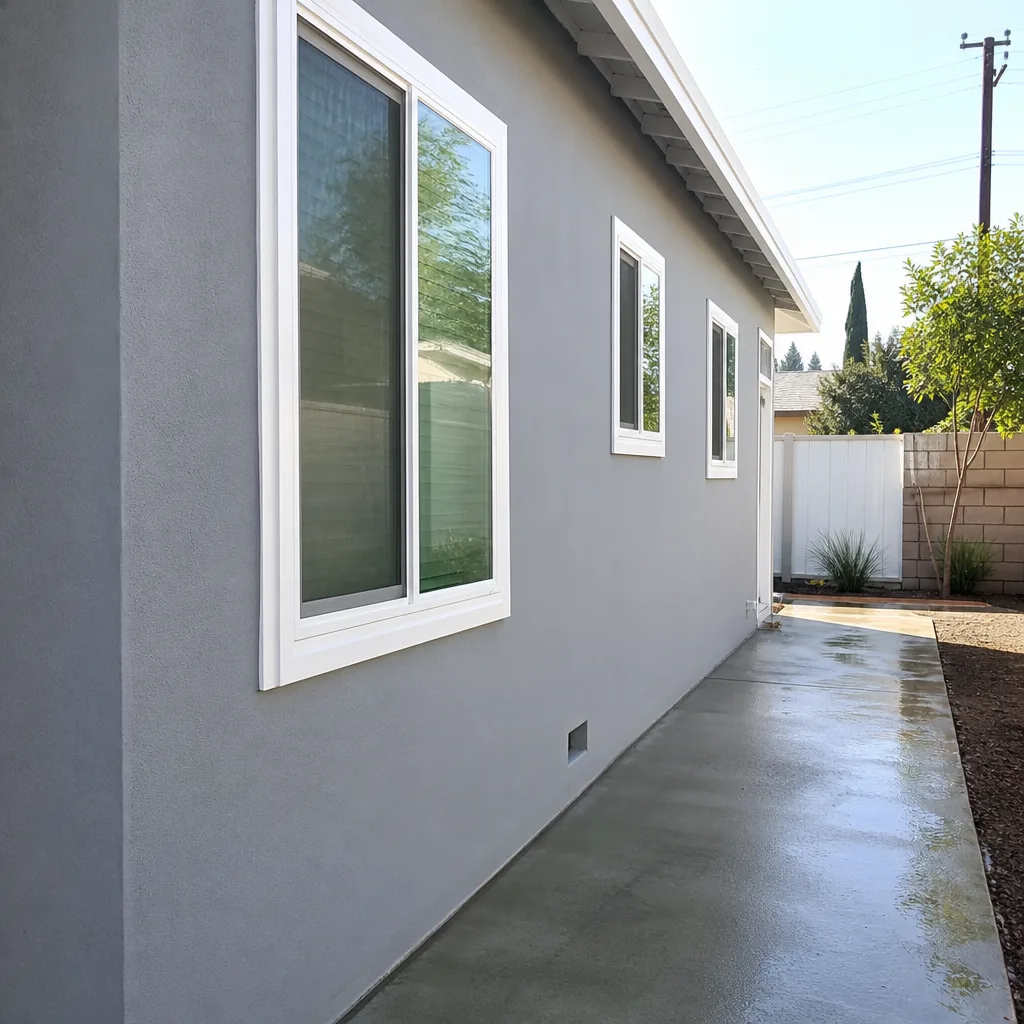 After
After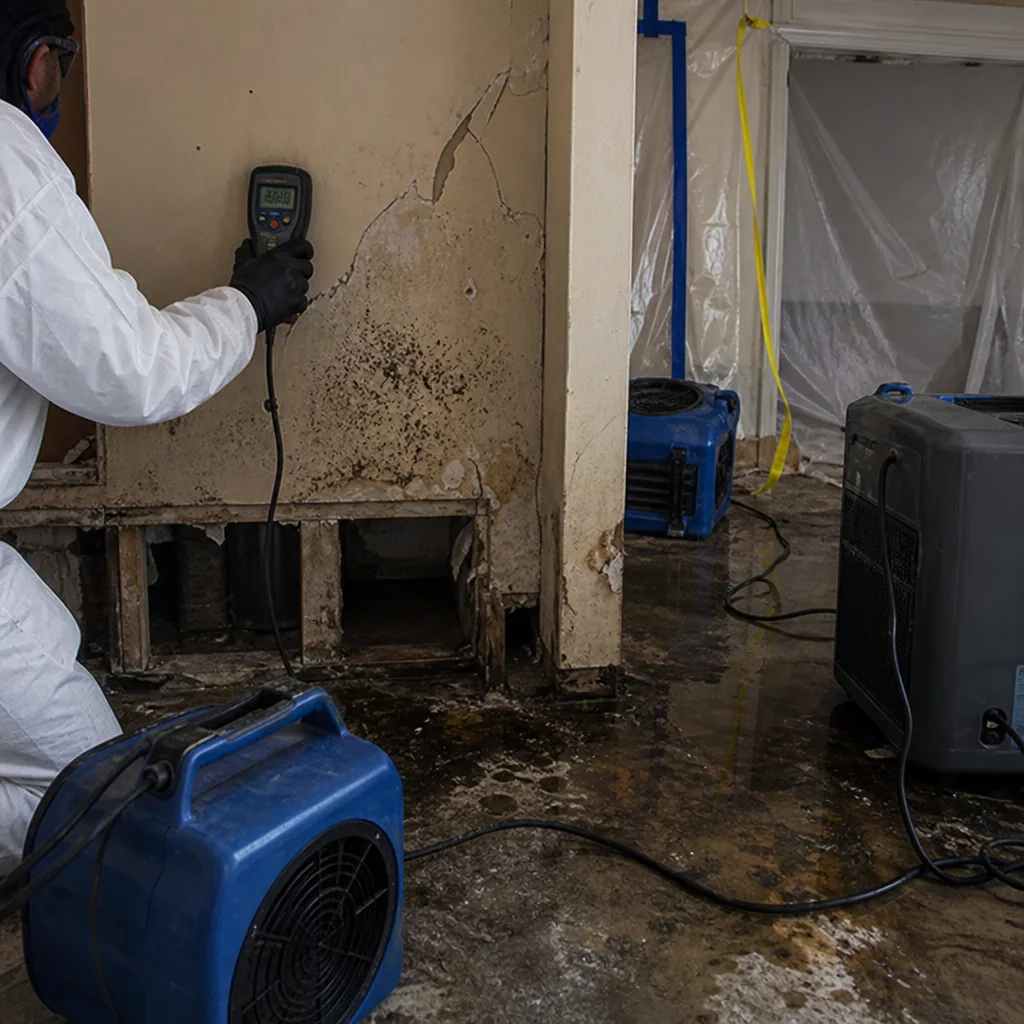 Before
 After
After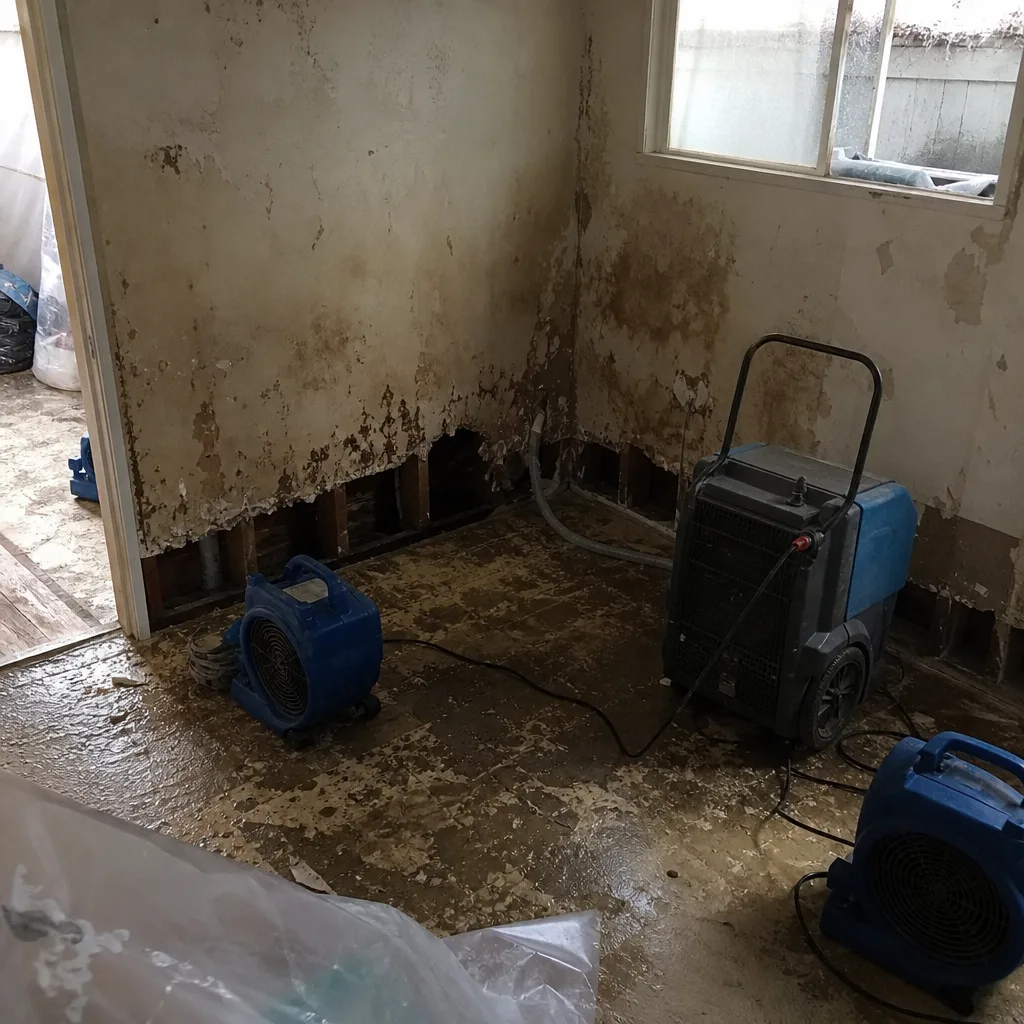 Before
 After
AfterPricing for Storm Damage Restoration in Lakewood, CA
We Also Serve Cities Near Lakewood
Our crews work throughout the surrounding area, including Harbor City, Lomita, Carson, and Long Beach. If you’re in one of those cities and dealing with storm damage, you’ll get the same Threshold Verified techs and the same written price guarantee. Many of our clients are part of the broader Lakewood community, and we’re here for the neighborhoods that ring it, too.
Serving Lakewood, CA - Our Local Coverage Area
We’re based in the Lakewood area and know this community well. Use the map below to see our service coverage - if you’re nearby, we can almost certainly help.
FAQs About Storm Damage Restoration in Lakewood
How do Lakewood’s slab-on-grade foundations change the drying plan after a storm floods a 1950s tract home?
On a slab-on-grade home, drying requires moisture mapping across the concrete itself, not just the carpet and walls. Water trapped in the slab’s top inch releases vapor for weeks, so we set Dri-Eaz dehumidifiers and XPOWER air movers longer than we would on a raised foundation. The plan also has to check for under-slab plumbing leaks, because a failed cast-iron line can keep feeding moisture into the slab no matter how long you dry the surface. Call (562) 999-7643 for an assessment of your specific home.
Why do insurance adjusters in Lakewood often upgrade a ‘clean rain’ loss to category 2 water on older homes?
Adjusters upgrade to category 2 when the water has been in contact with soil or building materials long enough to carry significant contamination. In Lakewood’s older homes, wind-driven rain often travels across stucco, through wall cavities, and into slab areas that have been damp for weeks. By the time our techs arrive, that water is no longer clean, even if it started as rain. We document this with moisture logs and photos, and we coordinate directly with your adjuster. Call (562) 999-7643 and we’ll walk you through what your policy covers.
Can wind-rated doors actually reduce the amount of water damage we see after a Lakewood winter storm?
Yes. A properly sealed, wind-rated door prevents water from being forced through worn weatherstripping and warped frames during high winds. On 1950s stucco homes, original door frames have often shifted enough that a strong storm pushes rain straight into the wall cavity. Replacing or resealing those doors before storm season cuts the amount of interior water we find after a blow. If your doors have already failed, call (562) 999-7643 and we’ll include the door repair or replacement in the restoration scope.
What does a ‘failing door’ mean for a Lakewood home before the next storm hits?
A failing door is one where the weatherstripping has compressed, the frame has warped, or the threshold no longer seals against the door bottom. On Lakewood’s 1950s stucco exteriors, this is a common point of entry for wind-driven rain. The fix is often straightforward: new seals, re-shimming the jamb, or replacing the door with a wind-rated unit. But if you skip it before storm season, the next heavy rain could mean wet drywall and a call to us. Call (562) 999-7643 for a pre-storm inspection.
Do we need a permit in Lakewood to replace water-damaged structural components after a storm?
If the storm damaged load-bearing framing, roof sheathing, or foundation elements, the city of Lakewood requires a building permit for the repair work. Cosmetic work like drywall, flooring, and trim doesn’t need one. We’ll identify which parts of your restoration fall under permit requirements and handle the paperwork as part of the written scope, so you don’t have to navigate the city’s building department alone. Call (562) 999-7643 and we’ll tell you exactly what applies to your situation.
Storm-Wind Resilience in Lakewood: The Real Fix
Lakewood’s housing stock is unlike most of Southern California’s. The city was built largely between 1950 and 1965, during a postwar boom that produced tens of thousands of single-family homes on slab-on-grade foundations with stucco exteriors and original galvanized steel or cast-iron plumbing. That combination creates a specific failure pattern during storm season. Stormwater doesn’t just come through the roof or around windows. It travels under the slab, through corroded waste lines and cleanouts, and wicks upward into hallways and bedrooms far from the visible entry point. Restoration crews in neighboring Long Beach or Cerritos rarely see under-slab migration at this scale, because their housing stock is more mixed. But in Lakewood, it’s the dominant pattern.
During the first heavy rain of the season, we responded to a home in Lakewood Park where a wind-driven storm had pushed water past a corroded cast-iron cleanout under the slab, saturating the hallway carpet and baseboards. Our techs set up containment, used moisture mapping to trace the migration path across the slab, and ran structural drying with Dri-Eaz dehumidifiers and XPOWER air movers while the plumber re-piped the waste line. The mitigation logs showed pre-loss condition was restored in four days. That’s the Lakewood-specific playbook: not just dry the house, but find and fix the cast-iron failure underneath it.
Wind-rated doors are the second piece. A 1950s stucco home with original door frames has likely shifted enough over the decades that wind-driven rain finds its way around the weatherstripping and into the wall cavity. Before storm season, that means resealing or replacing failing doors. After a storm, it means checking every exterior door for water migration behind the jamb. Our Storm Damage Restoration team includes that check on every Lakewood loss, because skipping it is how a home gets re-flooded next season.
Contact Marsh Water Damage Restoration in Lakewood
If your Lakewood home has storm damage, flood water, or a wet slab that won’t dry, call (562) 999-7643 right now. A live person answers 24 hours a day, seven days a week, including holidays. You’ll get a written price before any work starts, a technician whose name and photo you receive before arrival, and the 365-Day Done Right Promise printed on every work order. If the repair isn’t right within a year, we return and make it right, free. Call (562) 999-7643 for a free estimate.
Written by Tobias Reyner, Owner at Marsh Water Damage Long Beach, serving Lakewood and the surrounding area.