
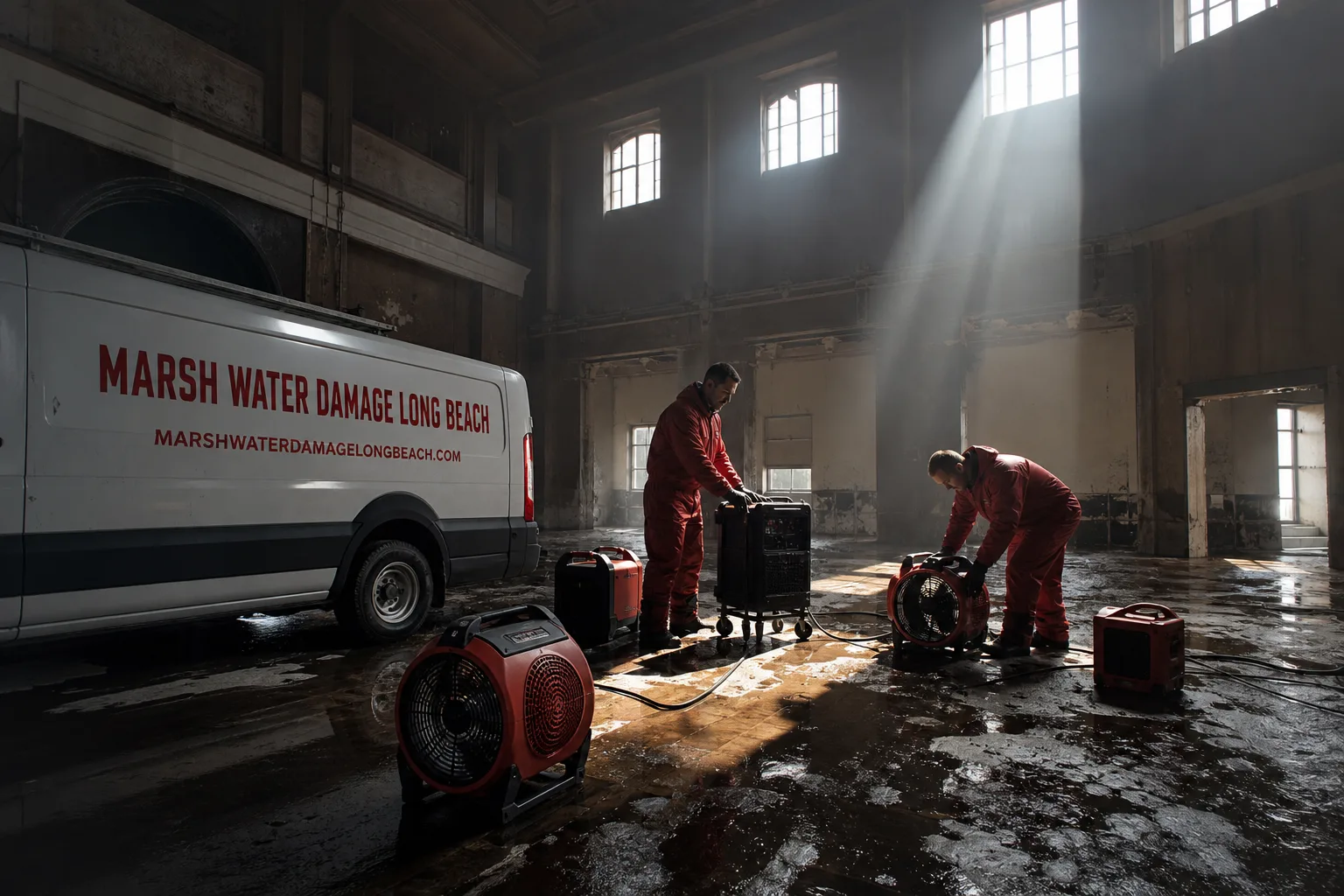
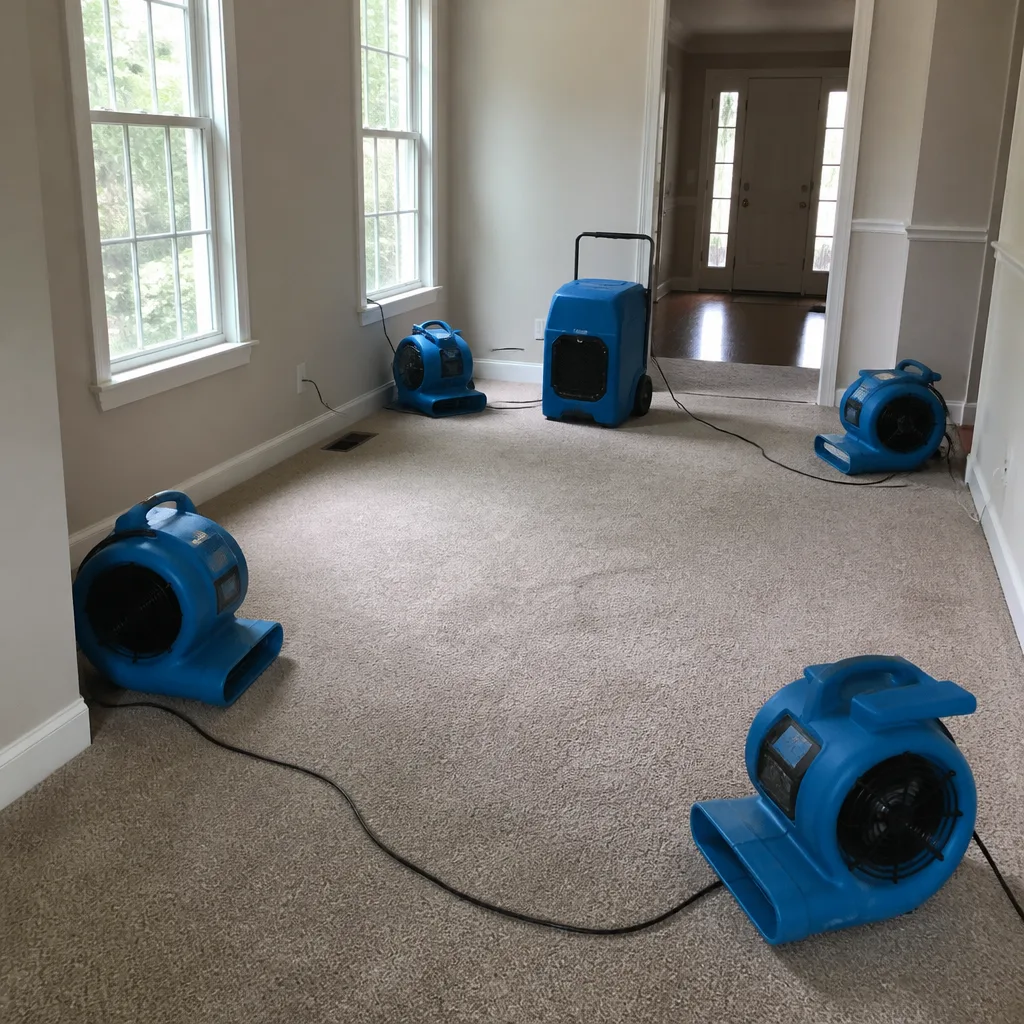
 Water damage drying
 Fire & smoke cleanup
 Mold remediation
 Storm response
 Sewage cleanup
 Reconstruction
Free visual inspection and a written scope of work before any mitigation begins - photos, moisture readings, and drying logs go in your claim file
The scope we write is the scope we bill. Anything new gets shown to you, in writing, before we touch it.
Get your free estimateFast, Reliable Water Damage Restoration Across Garden Grove
Water damage in Garden Grove rarely announces itself politely. It seeps through slab foundations, weeps behind stucco walls, and pools under original hardwood floors while you’re at work. Most residential water extractions in Garden Grove run between $850 and $1,400 before drying equipment is set, though slab leak jobs west of Euclid that involve under-slab moisture mapping can push higher. We answer the phone 24/7 at (562) 999-7643, and a live person picks up every time. Our crews work in Garden Grove neighborhoods daily, so when you call, you’re not getting a dispatcher three time zones away. You’re getting someone who knows the difference between a 1955 ranch on Fairview and a 1980s stucco complex near Garden Grove Boulevard.
We’re Water Damage Restoration specialists who’ve worked through enough Garden Grove slab failures, supply-line pinholes, and winter roof leaks to know what your house is hiding. The marsh in our name isn’t decoration. It’s low, wet ground, water where it shouldn’t be. That’s what this company deals with every day, and the name says so.
Key Takeaways for Garden Grove Homeowners
- Slab leaks and pinhole leaks are the signature Garden Grove failure mode. Original galvanized and copper lines from the 1950s-70s are at or past service life, and clay soil west of Euclid accelerates the problem.
- Most residential water extractions run $850 – $1,400 before drying equipment is set. Structural drying typically adds $350 – $700 per affected room depending on the drying target and time under water.
- A live person answers every call at (562) 999-7643, including holidays. We dispatch Garden Grove crews same day for emergencies, and every tech is Threshold Verified, meaning background-checked, identity-verified, and sent to you by name and photo before the knock.
- Any repair we make is covered for 365 days, in writing. If something isn’t right within a full year, we come back and make it right. Free second visit, included automatically, never something you have to argue for.
Restoration work we handle
Why Marsh Water Damage Long Beach Is Garden Grove’s Preferred Water Damage Restoration Company
We’ve been in business since 2005 as part of the Threshold Group family of restoration companies. In Garden Grove specifically, that means two decades of fighting the same two enemies: a high water table and 1950s-era plumbing that was never meant to last this long. We’ve crawled under homes near Village Green Park, torn out drywall in Little Saigon apartments, and dried out water heater floods on Stanford Avenue. The houses here share a skeleton, and we know it well.
What separates us in Garden Grove isn’t a slogan. It’s the Threshold Verified standard. Every technician who steps onto your property is background-checked and identity-verified. Before we arrive, you get the tech’s name and photo. At the door, they show a photo ID badge, every time, not just on the first job. If you’re home alone, a parent with young children, or an older homeowner, that standard matters. You know exactly who is coming before the knock.
We hold IICRC, RIA, and IFA credentials, and we run commercial-grade drying equipment from Dri-Eaz, Phoenix, XPOWER, B-Air, and Injectidry. The same gear national franchises deploy for large commercial losses, applied to a Garden Grove rancher. Tobias Reyner leads our technical team, and every job gets a written price before any work starts. Not an estimate that balloons after demo begins. A printed scope, agreed in writing, before a single tool comes off the truck.
Flood Damage Restoration in Garden Grove
Flood damage restoration in Garden Grove means something specific here: older homes, original plumbing, and clay soil that shifts with every wet winter. When a supply line lets go or a water heater floods a 1950s ranch, water moves fast through hardwood, crawl spaces, and drywall. The first 48 hours determine whether you’re drying or rebuilding. Most Garden Grove flood extractions run $1,000 – $1,600 depending on water volume and affected area. Once water is removed, structural drying with dehumidifiers and air movers typically adds $350 – $700 per affected room.
We’ve pulled water from crawl spaces, wall cavities, and under slabs across Garden Grove. The work is methodical: extract standing water, set containment where needed, map moisture with thermal imaging, then place air movers and dehumidifiers to hit drying targets. We take psychrometric readings (measuring the moisture in the air and materials) to confirm the structure is actually dry, not just dry on the surface. Then we document everything with photos, because insurance almost always wants a paper trail.
When a Garden Grove Homeowner Needs Flood Restoration
A slab leak that wicks into baseboards for days before you notice the swelling. A laundry supply hose that bursts while you’re at work and floods three rooms. A water heater that fails at year 12 and empties its tank across a hallway. These are the calls we take from Garden Grove every week. The faster you call (562) 999-7643, the less structural damage spreads.
Slab and Under-Slab Flood Recovery
Garden Grove’s high water table means a slab leak doesn’t just wet the flooring, it also saturates the soil beneath the concrete. If you only dry the surface, trapped moisture migrates back up through the slab for weeks. Our techs know to map moisture under the slab itself, not just across the top, and adjust the drying plan accordingly. In neighborhoods west of Euclid where clay soil and older copper lines create repeat pinhole leaks, this under-slab attention is how you avoid a second, quieter flood later.
Water Damage Cleanup in Garden Grove
Water damage cleanup in Garden Grove usually starts with a phone call at 11 p.m. from a homeowner standing in half an inch of water. The cleanup phase covers extraction, affected-content handling, and initial drying setup, most Garden Grove homes run $600 – $1,200 for this depending on square footage and how long water sat. That’s before deep structural drying. If you caught it early and the water was clean supply-line water, we can often dry walls in place. If it sat for days, we’re cutting drywall and pulling baseboards.
We manage the whole cleanup sequence: remove standing water, lift furniture and contents onto blocks or out of the room, set containment to protect unaffected areas, and start drying. Every step is photo-documented, because you’ll want that record for your adjuster. We also coordinate directly with insurance carriers when it helps, providing moisture logs, drying logs, and scope summaries in the format adjusters expect.
What Cleanup Actually Involves in a 1950s Ranch
In a Garden Grove ranch with original hardwood over a crawl space, cleanup isn’t just wet-vacuuming the floor. Water in the crawl space means we’re down there with moisture meters, checking subfloor readings. If we skip the crawl, the hardwood cups within weeks and the musty smell returns. So we don’t skip it. Cleanup means the room you see and the space under it, not one or the other.
Category 1 vs. Category 2 Water
Category 1 water comes from a clean source: a supply line, a water heater feed, a tub overflow. Category 2 carries some contamination, like washing machine discharge or a slab leak that sat long enough to pick up soil bacteria. The distinction determines whether drywall can be dried in place or must be removed. In Garden Grove slab leaks that go undetected for days, we’re frequently dealing with category 2, and that changes both the cleanup scope and the drying plan.
Common Water Damage Restoration Problems We See in Garden Grove Homes
- Under-slab leaks misdiagnosed as foundation sweating. A damp hallway in a 1960s tract home gets blamed on weather or condensation, when it’s actually a pinhole in the original galvanized line. By the time baseboards wick moisture and mold colonizes the bottom plate, mitigation is far more invasive. The tell is moisture that never dries out, no matter how many fans you run.
- DIY extraction that leaves trapped moisture under the subfloor. Homeowners rent a wet vac, pull the visible water, and call it done. But in a house with original hardwood over a crawl space, water trapped between the floor and the subfloor cups boards and breeds odor within weeks. We see this exact pattern repeated across Garden Grove every winter.
- Marine layer humidity slowing down drying targets. Garden Grove sits close enough to the coast that the marine layer pushes humidity up, especially in crawl spaces. If a tech dries the interior but skips the crawl after a winter roof leak, framing stays above 20% moisture content and rots silently. We check the crawl on every job, no exceptions.
- Cast iron and galvanized waste lines at end of life. Many Garden Grove homes still run original cast iron drain lines. When they crack, water damage shows up as ceiling stains from above, not puddles on the floor. We’ve flagged more failing galvanized waste lines than we can count, and it’s the kind of local pattern a generic restoration crew misses.
See the difference
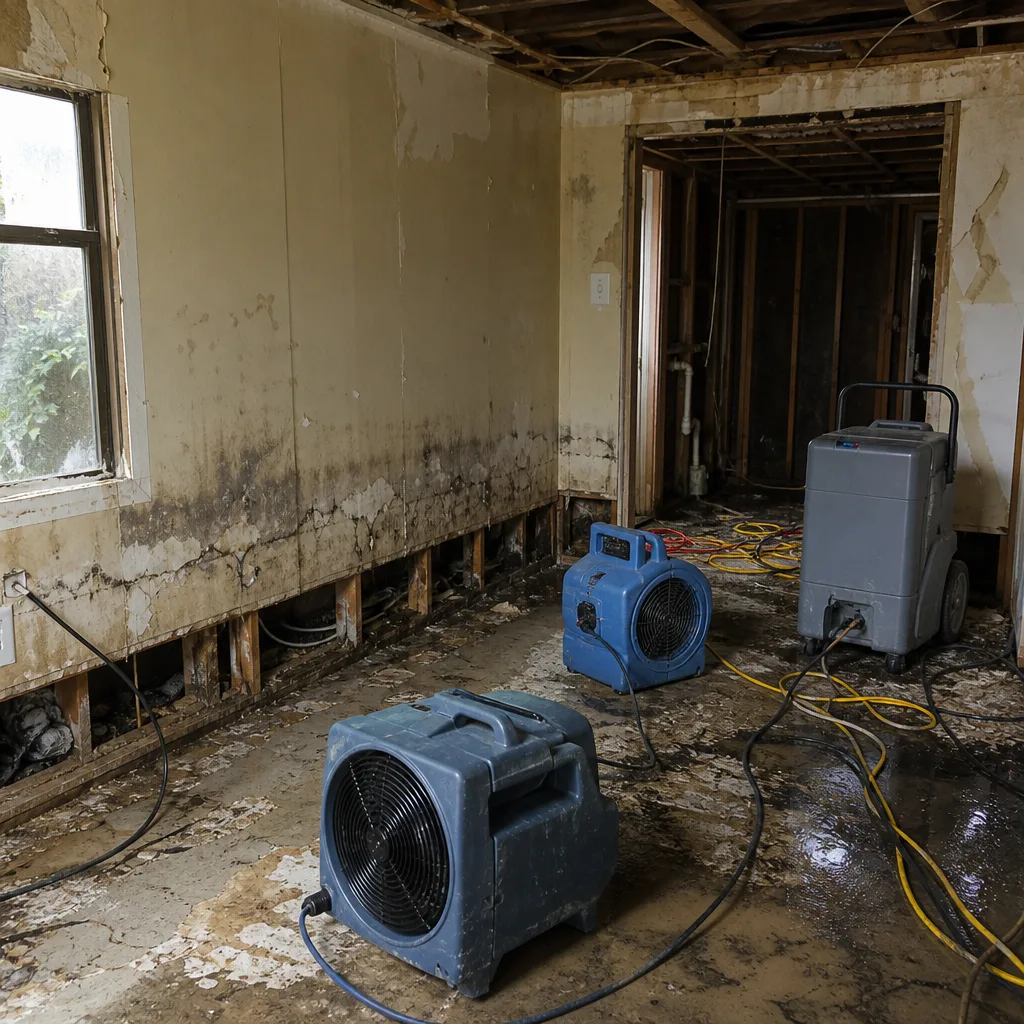 Before
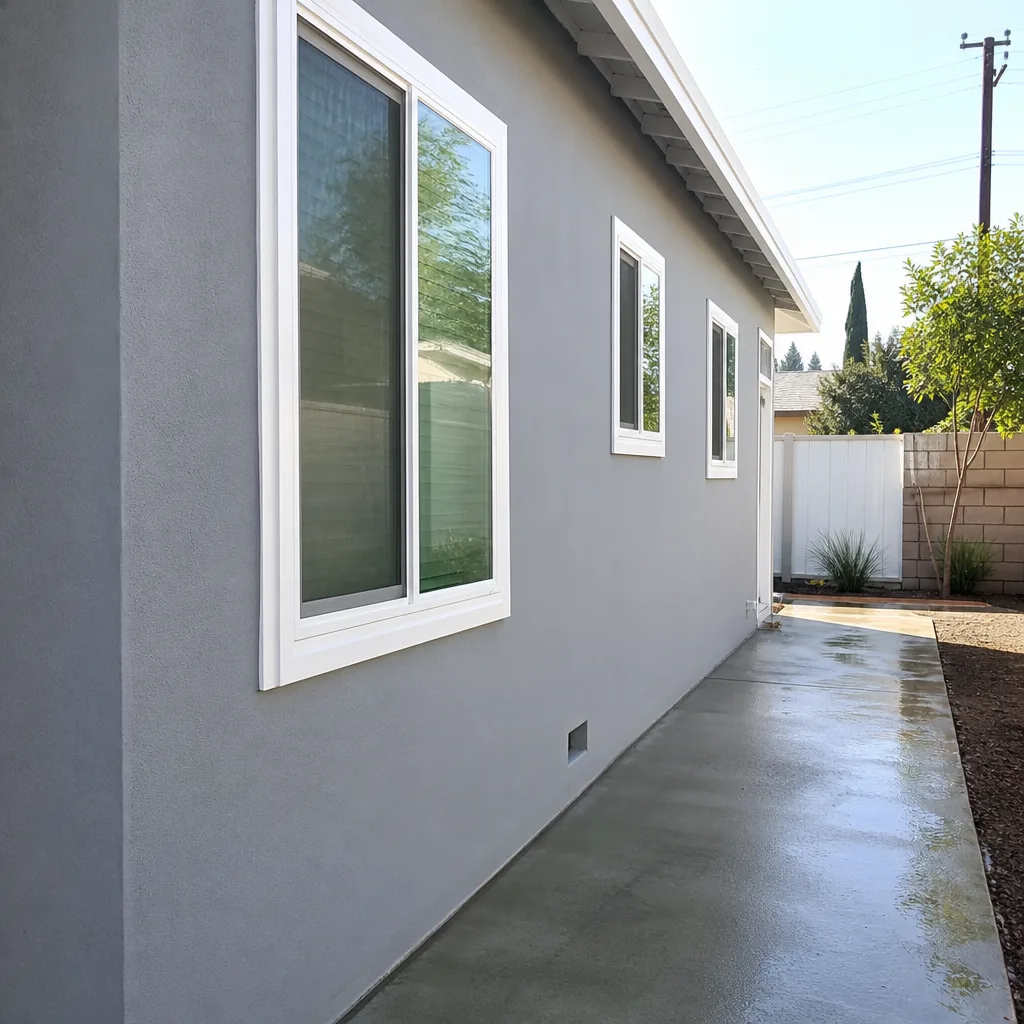 After
After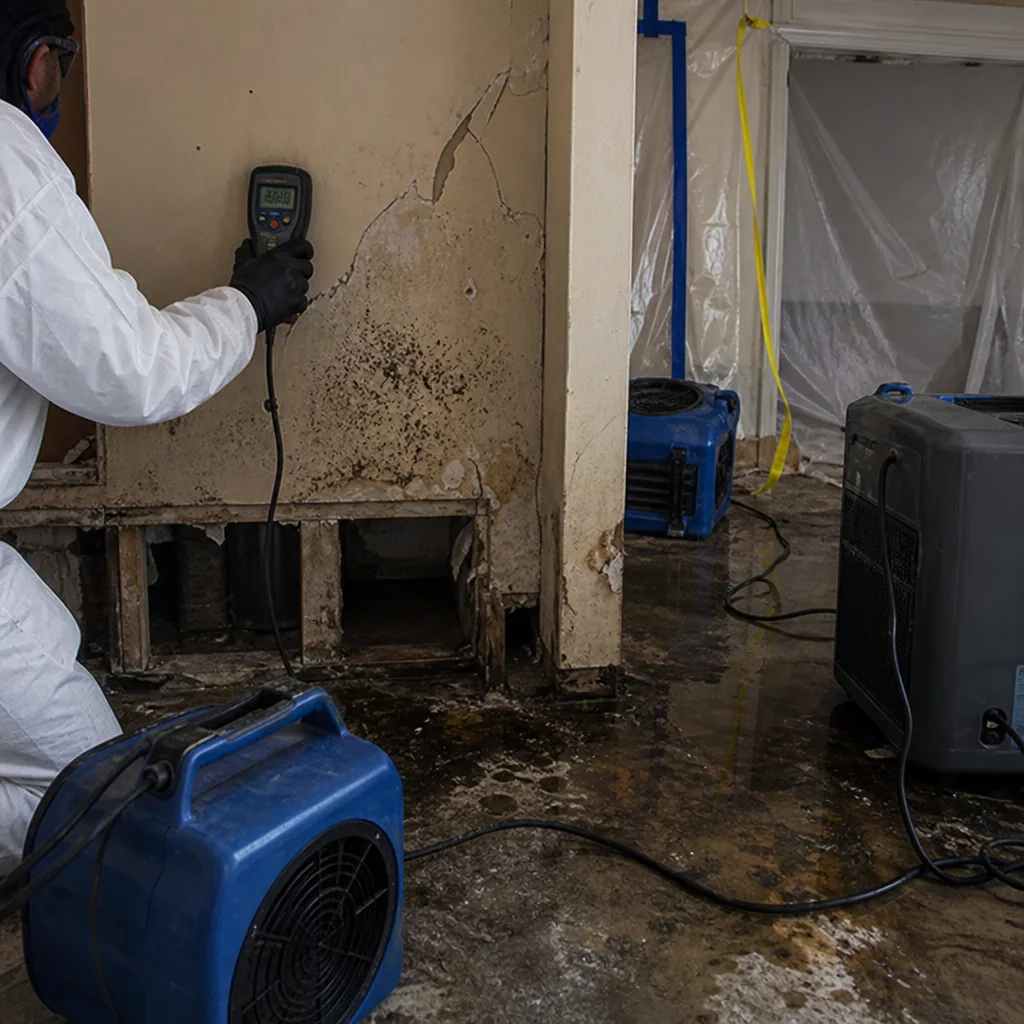 Before
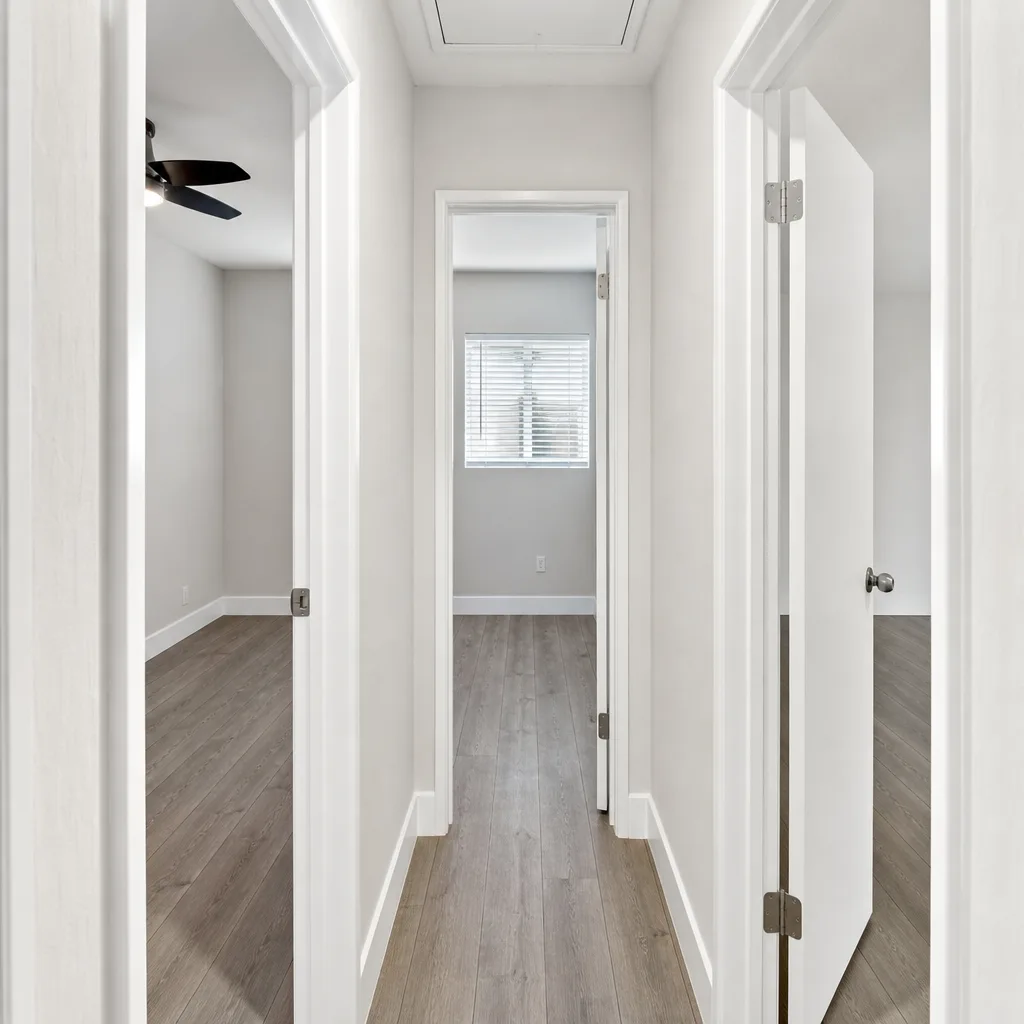 After
After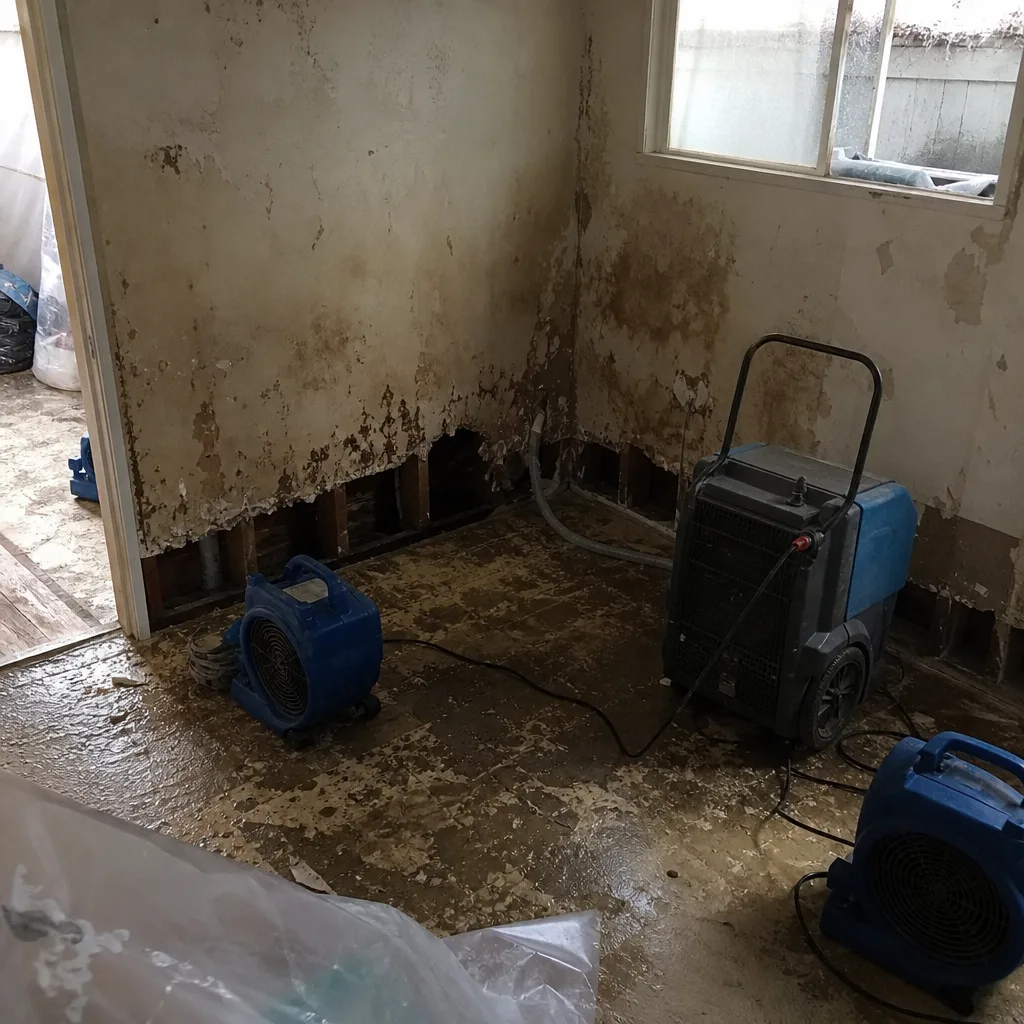 Before
 After
AfterTrusted Brands We Service in Garden Grove
Garden Grove homeowners ask us about equipment brands because they’ve seen cheap rental gear fail. We run Dri-Eaz and Phoenix extraction and drying equipment, the same units used in commercial losses and large multifamily jobs. We keep a stock of replacement air mover motors, dehumidifier filters, and moisture meter probes on the trucks, so a Garden Grove job doesn’t stall over a part. If your home has older plumbing, that doesn’t affect our equipment choices, but it does affect our drying plan. We match the gear to the structure, not the other way around.
Pricing for Water Damage Restoration in Garden Grove, CA
Here’s what you’re walking into, in real numbers. Most residential water extractions in Garden Grove run $850 – $1,400 before drying equipment is set. Structural drying typically adds $350 – $700 per affected room. A straightforward flood cleanup with extraction, content handling, and three days of drying in two rooms usually lands between $1,500 and $2,600. A slab leak with under-slab moisture mapping and wall cavity drying can run $3,000 – $5,000, depending on how far the water traveled along base plates and how many rooms wick moisture. We give you a written price before any work starts, and that price does not change once demo begins unless we both agree, in writing, to a change of scope.
We Also Serve Cities Near Garden Grove
Our crews work across Orange County and the surrounding area daily, and we bring the same Threshold Verified standard to Garden Grove as we do to neighboring Westminster, Cypress, Huntington Beach, and Hawaiian Gardens. If you’re just outside Garden Grove proper, call (562) 999-7643 and we’ll tell you exactly when a crew can reach you.
Serving Garden Grove, CA - Our Local Coverage Area
We’re based in the Garden Grove area and know this community well. Use the map below to see our service coverage - if you’re nearby, we can almost certainly help.
FAQs About Water Damage Restoration in Garden Grove
You’ll notice warm spots on the floor, unexplained spikes in your water bill, or baseboards that stay damp with no visible spill. In Garden Grove’s older ranch homes, these signs most often mean a pinhole or crack in the original galvanized supply line under the slab. We confirm with thermal imaging and moisture mapping, then explain your options before any cutting starts. Call (562) 999-7643 for an inspection, estimates are free.
It depends on the water category and how long the drywall stayed wet. If the water was clean supply-line water and we’re on site within 48 hours, drying in place is often safe. If the leak ran for days or wicked up from below, that’s category 2 or worse, and the drywall should come out. We’ll tell you straight which path your apartment needs, and why, before any work begins.
Category 1 water starts clean, like a fresh supply-line break. Category 2 has picked up some contamination, like the soil bacteria and minerals a slab leak drags in as it migrates through concrete and ground. In Garden Grove, a slab leak that goes unnoticed for a few days is almost always category 2 by the time we find it. That changes the cleanup scope, so we test and document before drying.
West of Euclid, the soil is heavier clay, and clay shifts with moisture. That movement stresses the original copper lines in 1950s-60s ranches, which develop microscopic leaks behind drywall. The leak weeps for days or weeks before the wall stains. We’ve responded to enough of these exact calls across Garden Grove that we now check for pinholes as a first step whenever we see an unexplained damp wall in that area.
Shut off the water supply to the heater, cut power to the unit at the breaker if you can do so safely, and move anything you care about away from the wet floor. Don’t run a consumer fan pointed at the drywall, that only spreads moisture. We’ll be there fast, and our first step is extraction, not demolition. Call (562) 999-7643 and a live person will answer, day or night.
What Garden Grove Homeowners Should Do Right Now
If you’re reading this with water somewhere it shouldn’t be, call (562) 999-7643. A live person answers 24/7, including holidays. We’ll dispatch a Threshold Verified technician to your Garden Grove home, send their name and photo before they arrive, and give you a written price before any work begins. If it turns out you caught it early and can wait, we’ll tell you that too. If it can’t wait, we’ll start the same day. You’ll know who’s coming, what it costs, and exactly what happens next. That’s how we work in Garden Grove, on every job, no exceptions.
Written by Tobias Reyner, Owner at Marsh Water Damage Long Beach, serving Garden Grove since 2005.