

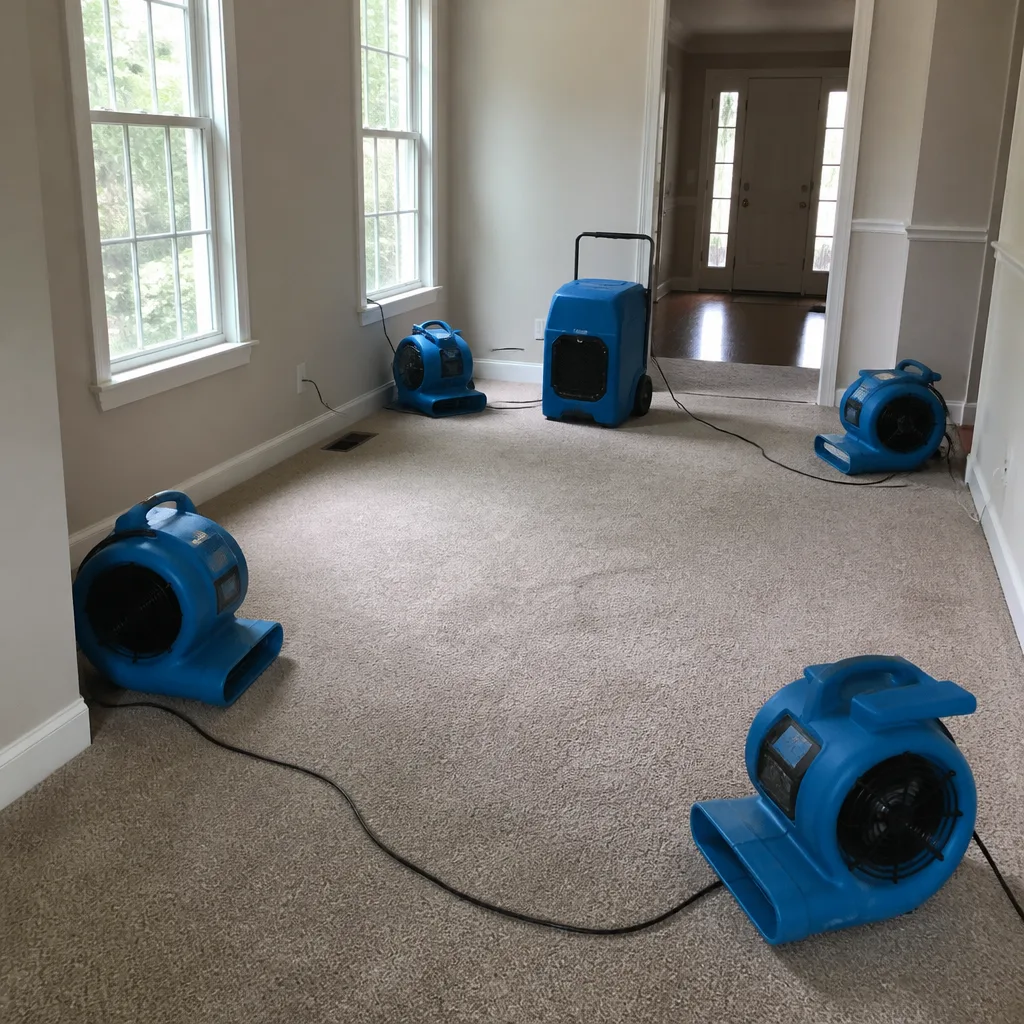
 Water damage drying
 Fire & smoke cleanup
 Mold remediation
 Storm response
 Sewage cleanup
 Reconstruction
Free visual inspection and a written scope of work before any mitigation begins - photos, moisture readings, and drying logs go in your claim file
The scope we write is the scope we bill. Anything new gets shown to you, in writing, before we touch it.
Get your free estimateStorm Damage Restoration in Garden Grove: What It Costs and Who Shows Up
Most storm damage restoration jobs in Garden Grove run between $2,400 and $9,800, depending on whether water reached wall cavities or stayed in the crawl space. A flooded house with saturated drywall and wet subflooring typically lands in the $4,500 to $7,500 range before contents cleaning. We dispatch crews to Garden Grove within 60 to 90 minutes for emergency extraction, and every job starts with a written scope and price before we cut into anything. Call (562) 999-7643 and a live person answers, day or night.
Fast, Reliable Storm Damage Restoration Across Garden Grove
Garden Grove homes don’t fail the way inland houses do. The marine layer pushes salt-laden air over west-side neighborhoods year round, and when winter rains hit, that salt has already done quiet damage to roof flashings, window seals, and stucco penetrations. We know which streets west of Euclid Avenue sit on the worst clay soil, and we know that a 1960s ranch near Lampson Avenue will have different failure points than a 1990s apartment complex off Brookhurst Street. That’s why our Storm Damage Restoration team treats every Garden Grove job as a local job, not a template. We’ve run extraction in crawl spaces under homes along Garden Grove Boulevard after heavy rain, and we’ve pulled saturated carpet from second-floor units near the 22 freeway when flashings let go. Response to Garden Grove is typically under 90 minutes for standing water. Call (562) 999-7643 and you’ll reach a person, not a queue.
You should know who is coming before the doorbell rings. Our Threshold Verified protocol means every technician sent to your Garden Grove home has been background-checked, identity-verified, and sent to you by name and photo before arrival. They show a badge at the door. Every time. The company that walks into your water-damaged home should be as predictable as the drying equipment we set. Most residential extractions in Garden Grove run $1,200 to $3,800 before drying equipment is placed, depending on how much water has to be pulled and how far it traveled.
Restoration work we handle
Why Marsh Water Damage Long Beach Is Garden Grove’s Preferred Storm Damage Restoration Company
We’ve been doing this since 2005 as Marsh Water Damage Restoration, part of the Threshold Group family of restoration companies. Tobias Reyner leads the team, and the standard he set has not moved: written price before work starts, written guarantee on every repair, and a 365-Day Done Right Promise printed on every work order. If the repair is not right within a full year, we make it right. No argument, no fine print. A free second visit is included automatically, not something you have to ask for.
Garden Grove homeowners call us because we answer. Not a callback queue, not a chatbot, not a voicemail that tells you to leave a message. A live person picks up 24 hours a day, seven days a week, including holidays. Storm water doesn’t wait for Monday morning, and neither do we. Our technicians hold IICRC, RIA, and IFA credentials, and they run Dri-Eaz, Phoenix, and XPOWER equipment, the same gear large commercial restoration jobs use, applied to residential houses across Garden Grove. When we arrive, we carry photo identification and a printed scope of work. There are no strangers walking through your house. There is a named, verified crew.
Local reputation matters in a city the size of Garden Grove. Homeowners on the west side near Euclid and Lampson talk to neighbors on the east side off Brookhurst. We have earned steady referrals in this city because we stick to the numbers we quote and we don’t disappear after the check clears. The 365-Day Done Right Promise means we are accountable for a full year. That is specific. That is enforceable. That is printed on every work order.
Flooded House in Garden Grove
Flooded House calls in Garden Grove usually come from one of three places: a failed galvanized roof flashing on an older ranch, a burst pipe under a slab foundation after heavy rain shifts clay soil, or a street-level garage that took water during a downpour. The first thing that matters is stopping the water source, then extraction. We arrive with truck-mounted extraction and portable units, pull standing water fast, and map the moisture before we move anything. A flooded house in Garden Grove with water across one or two rooms typically costs $2,200 to $5,800 to extract and begin structural drying, depending on how much drywall and flooring has wicked water.
You should not walk into a flooded crawl space to check it yourself. Standing water plus electricity is a genuine hazard, and flooded crawl spaces in Garden Grove’s 1950s and 60s tract homes often hide wiring that runs along floor joists. We shut off power to affected areas, verify it is safe, then begin pumping. Marsh is low, wet ground, water where it shouldn’t be. That is what we deal with every day, and the name says so.
Water Extraction and Structural Drying
Extraction starts with high-volume pumps and moves to Dri-Eaz air movers and Phoenix dehumidifiers positioned for cross-flow across wet surfaces. We take psychrometric readings, measuring the moisture in the air and in materials, so we know when the structure is genuinely dry, not just dry on the surface. In Garden Grove’s marine-layer humidity, that distinction matters: surface dry is not dry enough to prevent mold behind baseboards.
Trapped Moisture Behind Walls
In west Garden Grove, where clay soil expands when rain-saturated, pinhole leaks in older copper and galvanized lines behind walls feed moisture into drywall and stud cavities. A homeowner sees a small stain. By the time it is visible, the cavity behind it may already be wet across several stud bays. We cut only what is wet, inspect the cavity with moisture meters, and document what we find with photos for your insurance adjuster.
Flood Restoration in Garden Grove
Flood Restoration in Garden Grove means putting a storm-damaged house back to pre-loss condition after the water is out. That includes replacing rotted sheathing, treating affected framing, reapplying drywall, and matching texture and paint so the repair does not announce itself. A full flood restoration on a Garden Grove ranch with a wet crawl space and two affected rooms usually runs $5,500 to $9,800. Smaller jobs, a single wall cavity or a garage corner, run closer to $2,400 to $4,200.
We do not start demolition until you have seen a written scope and a written price. That is non-negotiable on every job, no matter how urgent the water looks. The written scope lists exactly what gets removed, what gets dried, what gets replaced, and what the guarantee covers. For storm damage in Garden Grove, we also coordinate directly with your insurance adjuster, providing photo documentation of every wet surface before, during, and after drying. You do not have to translate restoration jargon to your carrier. We speak that language.
Sheathing and Framing Repairs
Where storm water has saturated roof sheathing or floor decking, we remove the damaged material, inspect the framing beneath, and replace what cannot be dried. In Garden Grove’s older homes, the sheathing is often original to the 1950s or 60s, and once it swells and delaminates, it does not return to shape. Replacing it is the only path to a repair that lasts past the next winter rain.
Antimicrobial Treatment and Mold Prevention
Any wood or drywall that stayed wet for more than 48 hours gets an antimicrobial treatment after drying, because Garden Grove’s marine-layer humidity is exactly what mold waits for. We document the treatment in the drying log, which you keep, along with the written guarantee. If mold appears within 365 days on a surface we treated, the Done Right Promise applies.
Trusted Brands We Service in Garden Grove
We maintain parts and equipment familiarity with the brands most common in Garden Grove homes, and we stock local components so turnaround stays measured in days, not weeks. Our crews work on a wide range of residential systems, from 1950s-era ranch construction to 1990s stucco apartment complexes. The restoration equipment we deploy is Dri-Eaz, Phoenix, and XPOWER, the same manufacturers used on commercial losses. That means the drying you get in a Garden Grove crawl space is the same standard applied to a large commercial building, not a rental fan from a hardware store. For homeowners replacing failing hardware, we recommend and source stainless fasteners and coated flashing rated for coastal exposure, because untreated galvanized material will corrode again in this salt air within a few seasons.
See the difference
 Before
 After
After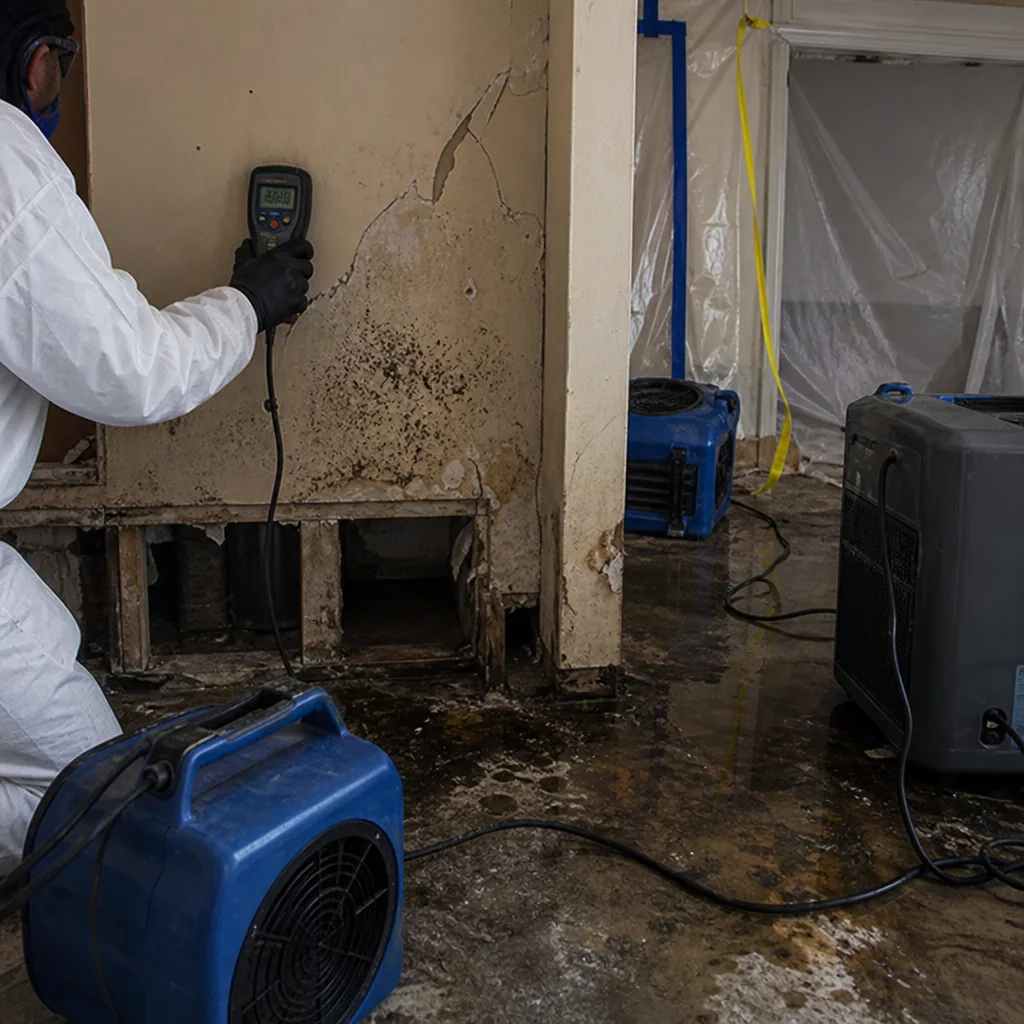 Before
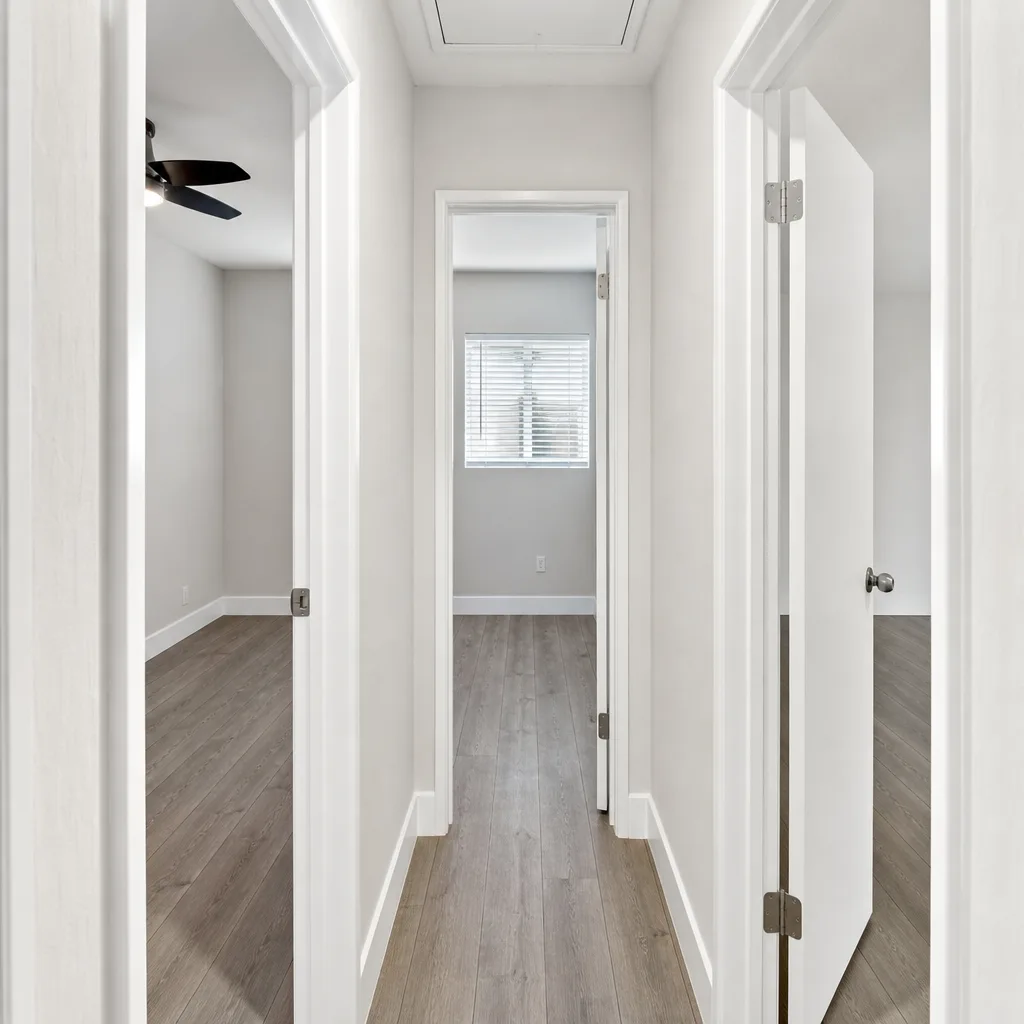 After
After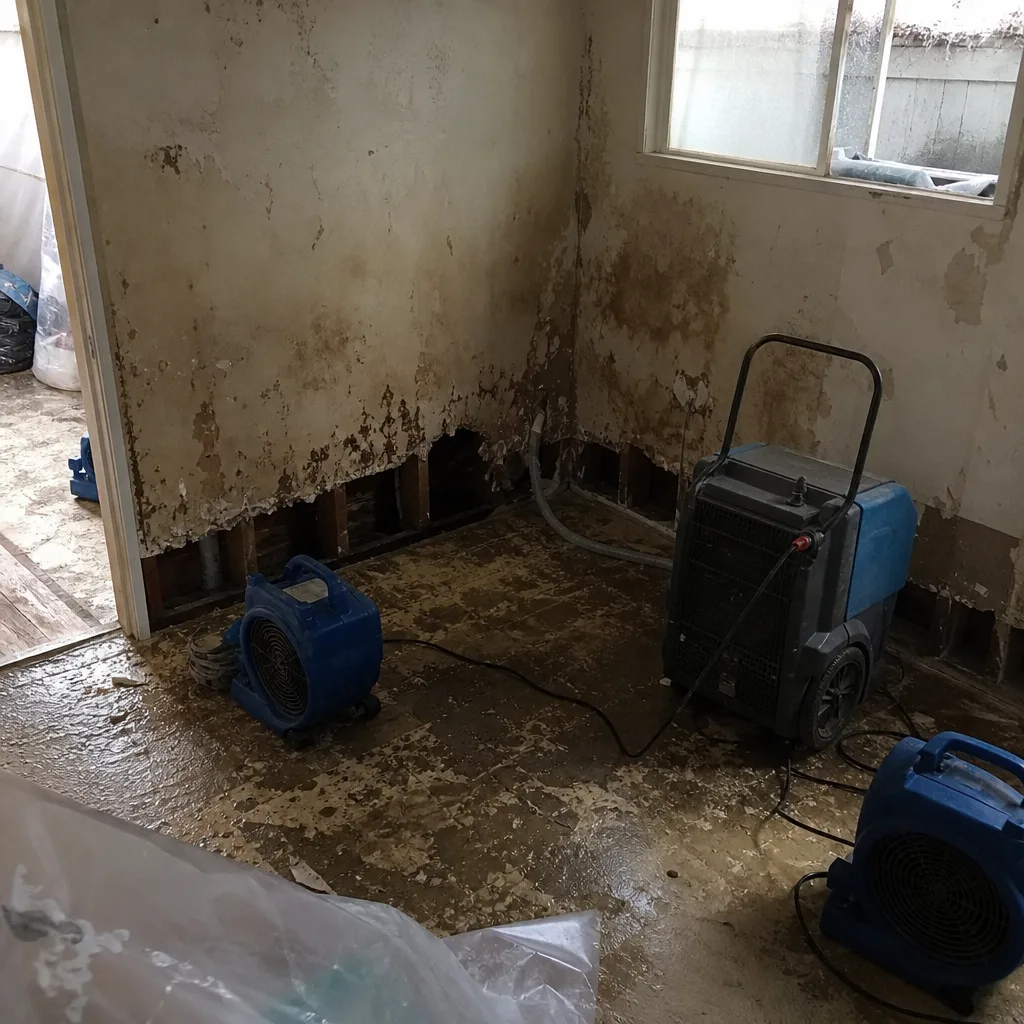 Before
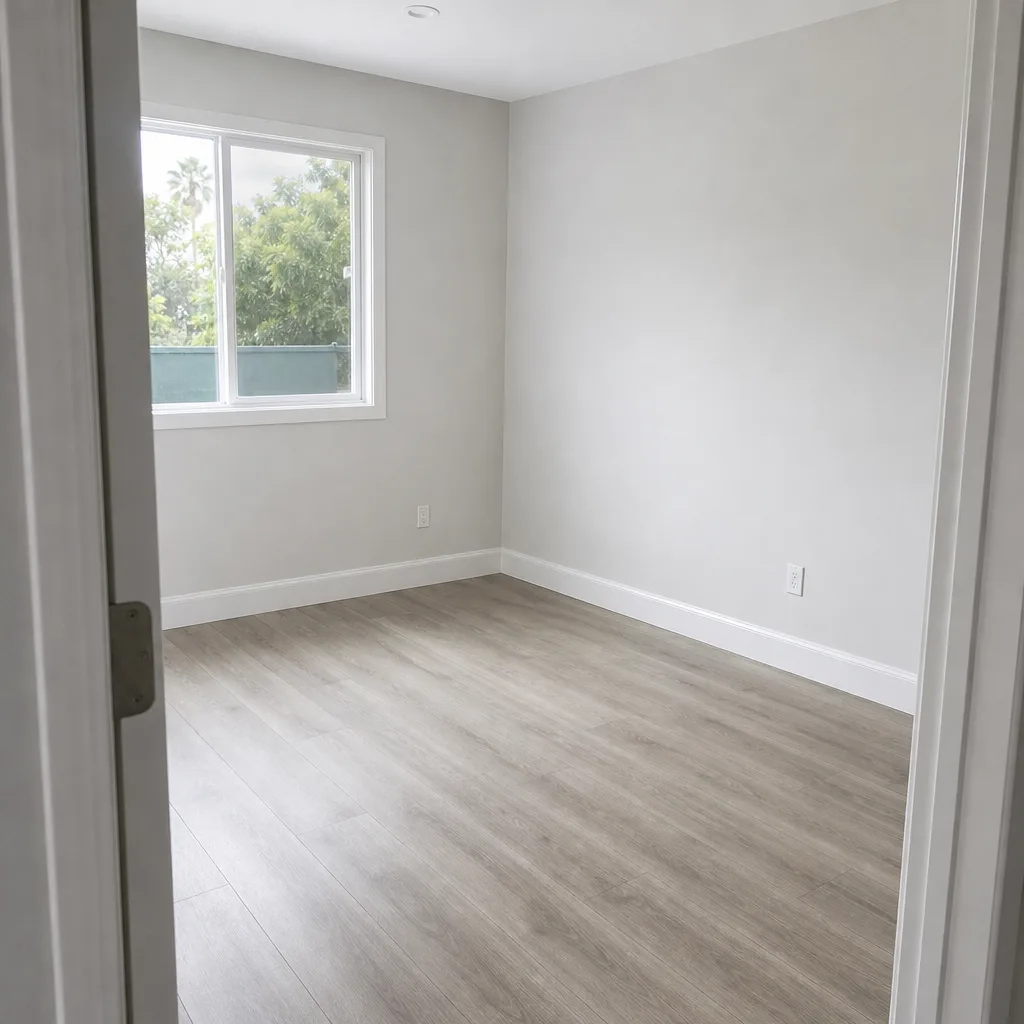 After
AfterCommon Storm Damage Restoration Problems We See in Garden Grove Homes
- Galvanized roof flashings corroded by salt air. Marine-layer salt settles on flashing and fasteners year round. A 1960s ranch near Lampson Avenue can look fine from the ground while the flashing behind the stucco is paper-thin and leaking during the first heavy rain.
- Pinhole leaks behind walls west of Euclid Avenue. Clay soil expands when rain-saturated, putting pressure on aging copper and galvanized supply lines. The result is pinhole leaks inside wall cavities, which feed repeated drywall stains and hidden mold.
- Poorly ventilated crawl spaces trapping storm-driven humidity. Garden Grove’s tract homes were built with limited crawl space venting. When winter storms drive humidity through the subfloor, joists and subflooring stay damp and grow mold within 48 hours.
- Stucco cracks letting water behind 1980s and 90s apartment exteriors. Stucco complexes along Brookhurst Street and the 22 corridor develop hairline cracks that look cosmetic. During heavy rain, those cracks channel water into wall cavities, and by the time a tenant sees a stain, the damage is already structural.
Pricing for Storm Damage Restoration in Garden Grove, CA
Garden Grove pricing is shaped by the age of the housing stock and how far water traveled. A flooded single room with standing water extraction and structural drying runs $2,200 to $4,500. A whole-house flood restoration with crawl space drying, drywall replacement, and antimicrobial treatment runs $5,500 to $9,800. Pinhole leak repairs behind walls in west Garden Grove run $2,400 to $5,200 depending on how many stud bays are wet. Stucco leak remediation on 1980s-90s apartment units runs $3,000 to $7,500 per affected wall section. Every quote is a written price before work starts, not an estimate that moves after demolition. Call (562) 999-7643 for a free assessment and exact numbers for your house.
We Also Serve Cities Near Garden Grove
Our Garden Grove crews regularly handle storm damage in Westminster, Cypress, Huntington Beach, and Hawaiian Gardens. If you live in any of these nearby cities, you get the same Threshold Verified technicians and the same written price guarantee. Read more about our Storm Damage Restoration in Garden Grove coverage or call (562) 999-7643 from anywhere in the area.
Serving Garden Grove, CA - Our Local Coverage Area
We’re based in the Garden Grove area and know this community well. Use the map below to see our service coverage - if you’re nearby, we can almost certainly help.
FAQs About Storm Damage Restoration in Garden Grove
The soil west of Euclid Avenue in Garden Grove has a high clay content. When winter rain saturates that clay, it expands and shifts, putting pressure on the older copper and galvanized supply lines that run under slab foundations in 1950s and 60s tract homes. That pressure creates pinhole leaks inside wall cavities, which then feed moisture into drywall and framing. Homes in neighboring Westminster sit on different soil composition and do not see this failure pattern as often. Call (562) 999-7643 if you see a recurring stain on a west Garden Grove wall; the leak is likely already active inside the cavity.
The first thing is kill power to the affected area and verify the crawl space is safe to enter, because standing water and electrical wiring in an older Garden Grove crawl space are a real hazard. The second step is high-volume extraction, then moisture mapping to see how far water traveled through the subfloor. We do not place drying equipment blindly; we map first, then position Dri-Eaz air movers and Phoenix dehumidifiers where the moisture actually is. A flooded crawl space in Garden Grove typically costs $1,800 to $4,200 to extract and dry, more if standing water sat long enough to wick into joists. Call (562) 999-7643 and we will talk you through what your crawl space needs before we touch anything.
Yes. Storm water that has run through a street, gutter, or yard is Category 3 by IICRC definition, which is water that may contain sewage, bacteria, and other contaminants. In Garden Grove, where older neighborhoods along Garden Grove Boulevard and the 22 corridor can see street flooding during heavy downpours, that water entering a garage or a below-grade room means the affected materials need removal, not just drying. Carpet and pad that absorbed Category 3 water are removed, not restored. Porous materials like drywall below the water line are cut out and replaced. The remediation protocol is more involved and priced accordingly. Call (562) 999-7643 for a written scope specific to your exposure.
Mold can begin within 48 to 72 hours on damp drywall, insulation, and wood in Garden Grove’s marine-layer humidity, especially inside poorly ventilated wall cavities and crawl spaces. In stucco homes, where a roof flashing leak channels water behind the exterior finish, the cavity stays damp far longer than a visible leak on drywall would suggest. By the time a stain shows on the inside, mold may already be active in the stud bay. That is why we treat any wall cavity that stayed wet more than 48 hours with antimicrobial treatment after drying, and document it in the drying log for your insurance file. If mold returns within 365 days on a surface we treated, the Done Right Promise covers it.
Construction practices in Garden Grove’s 1980s and 90s apartment boom favored stucco exteriors over wood framing with minimal drainage plane detailing. Once hairline stucco cracks develop, which is common in complexes near Brookhurst Street, storm water enters the wall cavity and has no path out. Newer construction typically includes a rainscreen or drainage mat, which older Garden Grove apartment buildings do not have. The result is water sitting against sheathing and framing inside a wall for weeks after each rain, causing dry rot and mold with no visible exterior sign. We photograph and document every opened cavity for property owners and their adjusters. Call (562) 999-7643 for an assessment of an affected unit.
If you have standing water, a sagging ceiling, or a stain that keeps coming back after rain in Garden Grove, call (562) 999-7643. You will speak to a person. You will get a written price before work starts. And the technician who shows up will be someone whose name and photo you already have.
Written by Tobias Reyner, Owner at Marsh Water Damage Restoration, serving Garden Grove since 2005.